| Glossary Of Picture Framing Terms
[577] |
A
Absorbent Refers to the ability of some materials - often composed of pressed or woven fibers - to soak up and retain liquid.
Some mat board brands have absorbent properties. |
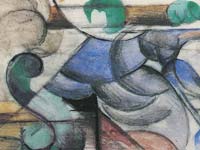
| Abstract art An art style that avoids realistic and recognizable imagery, and instead depicts emotion through compositions of color and shape. Abstract art began to shift to the mainstream around the turn of the 20th century, as artists sought new ways to express their interpretations of the world. |
 |
| Acid Any chemical whose pH level is below 7. Acids can react negatively with fine art papers, causing discoloration and peeling of the medium, or weakening the paper. This affects the longevity of the artwork; therefore most important artworks are preserved with acid-free, archival quality products. |
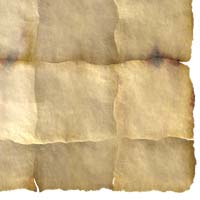
| Acid Burn This occurs when artwork is matted and framed using materials that are not conservation quality (acid-free). Acid burn presents as a yellow or brown discoloration on the art paper. |
 |
| Acid Etched A method used to affect the reflective qualities of glass. One or both sides of the glass is treated with an acid, then the glass is returned to a neutral pH to avoid damaging the artwork. |
Acid Migration The movement of acid from an acidic material to material of lesser or no acidity, either from direct contact or through exposure to acidic vapors in the surrounding environment.
May occur either when the two materials are in contact with each other, or by vapor transfer from one material to nearby materials not actually in contact with it. Boards, endpapers, and protective tissues, as well as the paper covers of books and pamphlets, may contain acid and transfer it to otherwise low-acid or acid-free paper of the text. |
| Acid Neutralizer Any basic/alkaline substance that has the ability to alter another substance's pH level, returning it to 7 (neutral). In picture framing, calcium carbonate is most commonly used. Also called "buffer" |
| Acid Outgassing A transfer of an acidic substance from one material to another. In picture framing, this is seen when a mat is not acid-free, and therefore damages the artwork behind it. |
| Acid-free Paper materials with a pH of around 7 are considered to be acid-free. These materials are less likely to harm artwork over time. Materials with a pH below 6.5 or above a pH of 8.5 are not considered acid-free. |
 |
| Acrylic Gesso A mixture of calcium carbonate (chalk) and an acrylic binder and a white pigment. Coating a canvas with this substance prior to painting with acrylics will improve the longevity of the artwork. The application of the gesso helps the paints to go on more smoothly, and prevents them from soaking into the raw, unprimed canvas. |
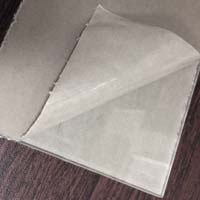
Acrylic Glass Often called plexiglass (derived from the brand name Plexiglas), acrylic glass is often used in as the clear cover or “glazing” in framing. It is lighter than real (silicate) glass and allows for a clearer, untinted view of the artwork behind it. It does not shatter and can be treated to be archival and UV-resistant.For more information see our article :
Acrylic vs Glass
To order Custom-cut plexi sheets click here: Plexi Sheets
|
 |
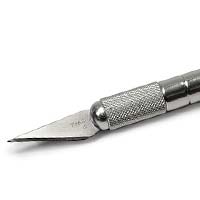
| Acrylic Knives When cutting acrylic glass for picture framing, it is best to score the acrylic along the line multiple times, and then break it off against a flat edge. A large cutter can be used for cutting acrylic glass, but sharp, handheld knives (such as utility blades) work as well. |
 |
| Acrylic resin A group of related thermoplastic or thermosetting plastic substances |
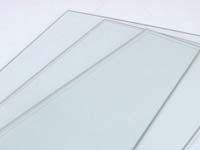
| Acrylic Sheet Another name for acrylic glass, or plexiglass. Often used in picture framing in place of real glass because it is shatter-proof, much lighter, and clearer than most types of glass. Acrylic is available with non-glare and UV protective properties. |
 |
| Acrylic-primed canvas Due to their different properties, canvases used for acrylic and oil painting cannot be primed with the same medium. Acrylic primers are chemically prepared to provide the correct balance of flexibility and rigidity. This primer also provides a tooth (coarseness) that allows the paint to properly adhere to the canvas. Applying a primer prevents the paint from soaking into the canvas. |
Acrylite A brand name acrylic plastic sheeting (acrylic glass). Acrylite offers a wide selection of museum and conservation grade acrylic for use in picture framing, residential and commercial windows, and aviation.
Order it now: Acrylic plexiglass |
 |
Adhesive In picture framing, an adhesive is used to affix the artwork to the mat or backing. Double sided tape or a wet adhesive such as a spray glue can be used. If the piece must maintain archival quality, an adhesive must be used that is acid-free and can be removed without damaging the artwork. Water-activated paper tapes and rice starch are most common.
Order now: Framing Tape |
 |
Adobe An international software company based in the USA that produces creative multimedia programs for all kinds of artistic operations.
Adobe products include: Photoshop, Illustrator, Acrobat, InDesign, Lightroom, Soundbooth, Bridge, and many more. |
| Alkaline Paper A pH neutral paper that is generally processed with calcium carbonate, the alkaline substance most commonly used in art production. Alkaline papers are acid-free and conservation-grade. |
| Allowance The additional space provided to avoid overflow or miscalculation in picture framing. Often, the rabbet will have an allowance beyond the thickness of the contents of the frame, so points or brads can be inserted. The framer will also cut your frame with a 1/16" allowance on each side. Should your artwork expand due to humidity or temperature changes in the future, this extra space will prevent buckling. |
| Almond Color A light shade of brown with a strong white component, providing a soft, pastel-like color. |
 |
| Alpha Cellulose Pure cellulose, extracted from wood pulp. Another name for "purified wood pulp". Alpha cellulose has the longest and most stable chemical chain, which results in the strongest art papers. |
Alphamat The first archival matboard with color, offering the benefit of preservation without sacrificing design, introduced by Nielsen Bainbridge in 1979.
Order online:
Full-sheet Matboard
Custom Matboard
|
| Alpharag 100% pure cotton rag, acid-free and archival quality fiber. Art papers made from alpharag are conservation-grade. |
Aluminium Aluminium metal pciture frames are often less expensive than wood frames, and the face of the frame is generally flat or curved, without any ornate decoration.
This is due to their manufacture, which consists of dragging strips of aluminum through a die (mould) cut in the shape of the frame's profile. This ensures the frame length is completely uniform.
Aluminium frames are strong and sturdy; a thin frame can support quite a large image, despite the added weight of the glass and backing.
We have a large selection of metal frames. |
| Aluminyzed Prints Aluminyze prints are images infused directly into a sheet of aluminium using a hot press - a process called sublimation. The result? A vibrant and durable print with unparalleled colour and depth. |
Anodized Aluminum Anodized aluminum is a type of aluminum alloy or substrate that has undergone an electrochemical process called anodization to form a durable, corrosion-resistant oxide layer on its surface. Anodized aluminum surfaces exhibit enhanced hardness, scratch resistance, and color stability, making them ideal substrates for laser engraving, marking, and decorative applications. Laser engraving on anodized aluminum selectively removes or modifies the oxide layer to reveal contrasting colors, create high-contrast designs, and produce permanent, high-resolution markings with exceptional durability and longevity.
Anodized aluminum laser engraving is widely used in signage, branding, consumer electronics, and aerospace industries to achieve aesthetic, functional, and durable product labeling, identification, and customization solutions on aluminum-based components and assemblies.
|
| ANSI The American National Standards Institute. This national group determines the guidelines governing a wide variety of commercially produced goods. |
| Antiquing The act of making something look old (antique), by scratching, painting, buffing chemical or digital alteration. |
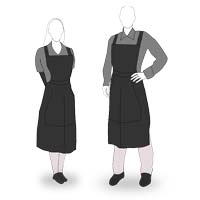
| Apron A protective garment worn over the clothing. In art production, an apron is worn when dry mounting, coating canvas, painting and working with any type of chemicals. Aprons are made from various materials, from thin cotton to heavy-duty plastic. |
 |
Aqueous-Based Printers Aqueous-based printers, so called because the ink used is primarily water mixed with either dyes or pigments, are widely used for canvas printing and typically offer the best image quality.
Most print shops have moved to pigmented inks because these inks provide a more urable print than dye inks; pigmented inks are now the standard. |
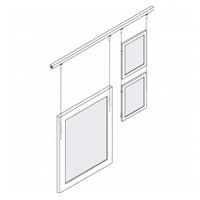
| Arakawa hanging system Arakawa is a company that supplies picture frame hanging rails for easy residential or commercial art displays. They advertise clear hanging wires and subtle rails that do not distract from the artwork. |
 |
| Arch Mat The mat opening is cut in the shape of an arch; a rectangle or square with a curved top line/side. A popular display for wedding photographs. |
Archival Archival framing means that all the materials involved in the process are completely acid-free. Your artwork is framed to last.
An original artwork can be considered archival if no irreversible treatments (such as lamination or dry mounting) are applied, and the framing products involved are of archival quality. |
| Archival Ink Pigment inks designed for longevity. These inks resist fading and produce conservation-grade prints that will last for decades. |
Archival Paper Acid-free options for fine art papers and matboard are generally made with 100% cotton rag fiber, to withstand discoloration and fading for decades. Also called "conservation grade."
Many of our papers are archival quality.
Order online: Fine Art Prints |
| Archival Products Any professional-grade fine art paper, mat board, backing or acrylic that is acid-free and constructed to maintain its color and condition, and protect the artwork, for approximately 100 years. |
| Archival-stub Framing materials designed to keep artwork undamaged and intact for as long as it is displayed (as many as 100 years), under moderate circumstances. Also called conservation-grade or museum-grade. |
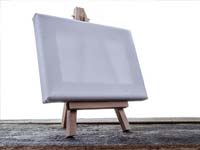
Artist Canvas Any canvas material intended and prepared for painting or other art mediums. Artist canvas is available on rolls, or pre-mounted on wood frames. Today, most canvas is made from cotton and linen, though hemp was common in the past. The canvas may be primed or unprimed, depending on the artists preference.
Order online:
Mounted Artist Canvas
Rolled Artist Canvas |
 |
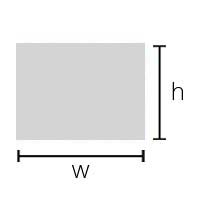
Artwork Height When ordering a frame, you will be asked to provide a “height” measurement. This is always the vertical measurement of the artwork you are framing. Measure your piece from top to bottom. It is important to ensure the ruler or measuring tape is straight (the same distance from one side on each end) and the recorded measurement is accurate to within 1/16th of an inch.  |
| Artwork Size The width and height of the artwork for which you are purchasing a frame. It is important that these measurements are accurate to 1/16th of an inch, as your frame will be custom made using these dimensions. |
 |
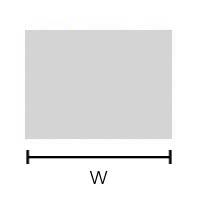
| Artwork Width When ordering a frame, you will be asked to provide a “width” measurement. This is always the horizontal measurement of the artwork you are framing. Measure your piece from left to right. It is important to ensure the ruler or measuring tape is straight (the same distance from the top on each side) and the recorded measurement is accurate to within 1/16th of an inch. |
 |
| Ash wood A member of the Olive family, Ash can be found across Europe, Asia and North America. Considered a Dense Hardwood, Ash is very strong and hardy, but has attractive elastic qualities as well. White Ash and Black Ash differ in appearance, with White Ash being lighter in color with a looser grain, while Black Ash has a tighter grain and darker coloring. |
| Aspect Ratio The relationship between the height of your photo or artwork to its length is called the aspect ratio. |
| ASTM American Society for Testing and Materials. Define performance standards for a wide variety of commercially produced products in the United States. |
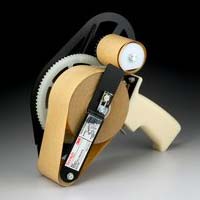
ATG tape Used in a rolling tape dispenser, ATG tape is an alternative to double-sided tape that applies a thin line of adhesive when pressed and rolled along a surface. Available in acid-free, this tape is useful for hinging images to mats or backing prior to fitting art into a picture frame, or for mounting artwork onto backing for frameless displays.
Order online: Tapes and Adhesives |
 |
| Ayous moulding Ayous is a hardwood tropical tree native to Africa. It is often used in the construction of picture frames. |
B ^^Top
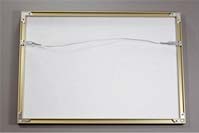
Backing A semi-hard backing is placed behind the art in a frame to keep the artwork safe and prevent warping. The backing is generally a piece of foam board cut to size, and is available in white, black or acid-free (archival). The glazier points or tabs inserted into the back of the frame to keep the artwork in place will press against the backing.
Order online: Board Backings |
 |
| Backing Paper Kraft or specialty paper which is adhered to the back of a picture frame once the contents have been fitted, also referred to as a "dust cover". This keeps dust, insects, humidity and other environmental factors from damaging the artwork. Backing paper also gives the frame a clean, professional look. |
| Balsa A very lightweight wood. It's ideal for sculpting and model making because it can be carved, chiselled, sawed, textured, or embossed with sharp-edged detail. |
Baltic Birch Baltic Birch Plywood is the leading plywood that is light in color with fine grain patterns. Its high durability and resistance is its strength, preventing warpage and blending.
A Baltic Birch Plywood is made of a strong material due to the usage of high-quality MR for veneer gluing. It is one of the most sold products for its long durability, low weight, surface hardness, quality, and high performance.
|
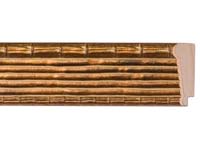
| Bamboo Ornament A picture frame decoration that utilizes the bamboo plant's slim lines and extended joints. This often results in a natural, Asian-inspired frame face. |
 |
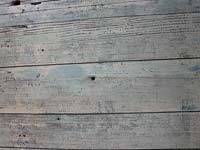
| Barn wood Picture frames made from barn wood are eco-friendly and environmentally conscious. "Barn wood" frames are constructed using repurposed wood taken from farm building materials, resulting in a naturally aged, rustic finish. |
 |
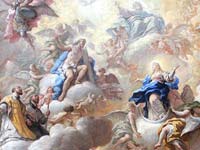
| Baroque A 17th century artistic period that produced dramatic paintings with a lot of color, motion and easily interpreted details. Today, baroque picture frames are usually ornate gold foil, with intricate designs. |
 |
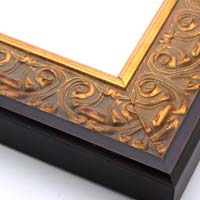
| Baroque Ornament A picture frame decorated in the Baroque style. Generally featuring an ornate face and embellished corners, and often covered in gold or bronze paint or leaf, with some antiquing. |
 |
| Barrier Material In picture framing, barrier material may refer to a thin, acid-free film laid over or behind an artwork to protect it from negative interaction with non-archival materials. The term can also describe the "dust cover" or "backing paper" applied around the back of a picture frame once the contents are in place, to keep dust and environmental substances from damaging the art. |
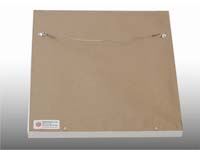 |
| Barrier Paper In picture framing, a thin, acid-free film laid over or behind an artwork to protect it from negative interaction with non-archival materials. The term can also describe the "dust cover" or "backing paper" applied around the back of a picture frame once the contents are in place, to keep dust and environmental substances from damaging the art. |
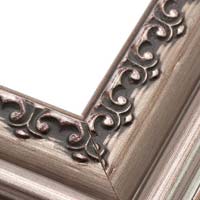
| Bas-relief A type of carving or sculpting resulting in a relief (raised) design that is protrudes only slightly from the flat surface of the medium. Bas-relief is shallower than basic relief designs. In picture framing, frame faces where the details extend only minimally from the background. |
 |
Basswood Found in Europe and North America, with many different types found in Asia, Basswood is from the Tilia family, and is also known as Linden.
A very common wood used in picture frame mouldings, it is a soft hardwood that is easy to shape and carve. It has a fine, unobtrusive grain, and is quite lightweight. In the past, it was used in wood sculpting and puppet-making. |
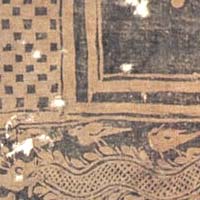
| Batik An art technique that involves soaking wax-covered fabric in dye. The wax resists the dye, and is then removed with boiling water. As a result, the sections of the fabric covered with wax are uncolored. If multiple colors are required, the wax-covered sections can be dyed once the wax is removed. |
 |
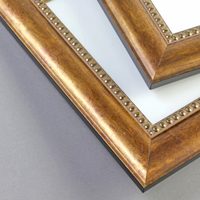
| Beading Refers to a picture frame face decoration; dots of wood or clay are applied - usually along the lip - and painted to create a beaded effect. |
 |
| Bevel/Bevelled Edge A sloping edge common on picture frames and linen liners. Generally, the approximately 45 degree slope begins at the top of the lip of the frame and slants in toward the artwork (see image). |
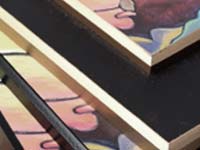 |
Bevelled mirrors Any mirror with a sloped groove cut into the glass itself, commonly along the outer edge, but occasionally further into the face of the mirror. A bevel adds dimension and style to an otherwise simple mirror.
Read more about home decor mirrors in our article. |
| Biaxially Oriented Polypropylene (BOPP) A thin film made from petroleum that is stretched in both directions (biaxially) during production, making it stronger and more stretch-resistant. In framing, it is used in packaging. |
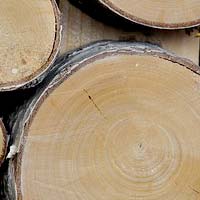
Birch The wood of a hardwood tree commonly found in North America.
Picture frames are often constructed of birch. The wood is a light color similar to pine, and works equally well as a natural frame with a clear finish, or the base for a painted face. |
 |
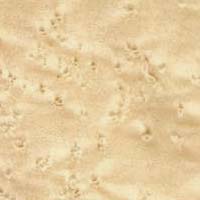
| Bird’s eye maple A type of hard maple wood recognizable by a distinctive pattern of non-uniform dots scattered across the grain. This type of wood may be used in the construction of picture frames. |
 |
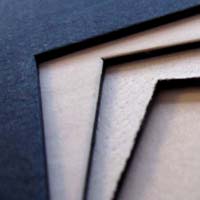
Black core mats Any mat board with an inner layer of pressed cotton fibers that are black in color. The face of the mat may be any color, but the bevel at the inner edge - surrounding the opening - will be black.
Black core can also be imitated by using a black marker to color the more common white core bevel. |
 |
| Bleach(ing) Refers to the whitening of a surface through the application of a chemical that removes color. In art production, wood pulp may be bleached to make it white for mats or papers. |
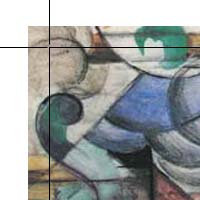
| Bleed The bleed is the portion of an image that goes beyond the cut lines. This ensures that the color goes all the way to the edges of a trimmed print. Alternately, it is the section of the image that is outside the viewing window of a mat or frame (and therefore unseen in the finished display). |
 |
| Bleed Resistant This term can refer to a variety of materials. Mat boards are classified as bleed resistant if they are color-fast and will not transfer their color to other materials. Pigment inks - the kind used in giclee printing - are generally bleed resistant, which means they will not feather and expand across the paper if exposed to water or humidity. Art papers may also be bleed resistant if their fibers are very compact. |
| Bloom A bloom-style picture frame is a oval or rounded corner rectangular frame that features a deep bevelled edge and scalloped corners and outer borders. The size of the curves can vary from very slight to dramatic. |
| Bloom Blush This occurs on varnished painting due to moisture trapped and condensing within the varnish. The surface of the image will appear fogged or whitened. |
Bond Paper Originally used in preparing government bonds, this type of paper is of high quality and quite durable, generally having a paper weight of more than 50 g/m². In the printing business, this paper is used to produce important documents, or may be used as a lower-cost option to light fine art papers, for producing artistic reproductions.
Bond paper may be used to create original artworks using pen, ink, or pencil, and is sometimes made from rag pulp, which creates a stronger paper with a distinct texture. |
Bottom weighting An effect applied to a picture frame mat. The bottom border is cut to be slightly wider than the other sides. This is due to a optical illusion inherent in viewing images that makes the bottom mat appear thinner than the other sides when in fact all sides are the same. Also called "drop bottom".
Order online: Custom Matboards |
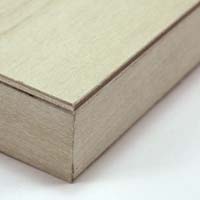
Box frame An option for a dry mounting base; a wood board with a wood frame behind to achieve the look of an unframed canvas without the canvas. The result is a sturdy decorative piece with a matte or shine finish. A choice of depths is generally available.
Purchase box frame custom wood panels directly from our website. |
 |
| Box nail A box nail is the type of nail most commonly used in woodworking and construction. They feature a flat head generally about twice the circumference of the nail width, and a long, round body with a pointed tip. |
| Brad gun Similar to a nail gun, a brad gun is loaded with small, thin nails used to secure the contents within a picture frame. The gun shoots the nails half-way into the excess rabbet at the back of the frame to keep the contents pressed toward the front. Also called a "brad nailer". |
| Brad nailers Similar to a nail gun, a brad gun is loaded with small, thin nails used to secure the contents within a picture frame. The gun shoots the nails half-way into the excess rabbet at the back of the frame to keep the contents pressed toward the front. Also called a "brad gun". |
| Brads Similar to "tabs" or "points", these small, thin nails are pressed into the remaining rabbet wall at the back of the picture frame to hold the contents within the frame. Brads cannot be folded back to remove the artwork, and are therefore ideal for permanent framing projects. |
| Bridle joint A bridle joint is a woodworking joint, similar to a mortise and tenon, in that a tenon is cut on the end of one member and a mortise is cut into the other to accept it. The distinguishing feature is that the tenon and the mortise are cut to the full width of the tenon member. |
| Buffer The method of applying an alkaline substance to mat boards and other materials to minimize the acidity of the material. In framing, calcium carbonate is commonly used. |
| Buffering Agent An alkaline substance, generally applied to mat boards to minimize the acidity of the material. In framing, calcium carbonate is commonly used. Also called "acid neutralizer". |
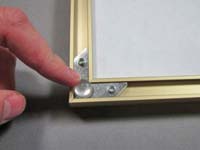
Bumper These half sphere, self-adhesive pads are placed in the bottom corners of a picture frame or canvas print to keep it from scratching or scuffing the wall when hung. Round and square foam and felt styles are also available.
Order online: Bumpers |
Bumpons Also called bumpers or bumps, these half sphere, self-adhesive pads are placed in the bottom corners of a picture frame or canvas print to keep it from scratching or scuffing the wall when hung. Round and square foam or felt versions are also available.
Order online: Bumpons |
 |
| Burfab A coarse, ribbed material similar to thin carpeting, that often blankets display boards and office partitions. Most commonly seen in grey, it is available in a variety of other colors. |
| Burnishing The process of polishing metal by rubbing it, until it achieves a high shine. This term can also refer to the surface itself, once it has been polished. |
| Burnishing bone A small, handheld tool used to smooth rough edges or raised fibers on mat boards caused by cutting. They may be made of real bone, and plastic burnishing bones are also available. |
C ^^Top
Calcium Carbonate A chemical (symbol CaCO3) naturally occurring in sealife shells and white rock such as limestone. In fine art printing, it is used to coat and buffer papers. |
| Calligraphy A style of typography (written) art that results in decorative and beautiful images forms from words and letters. Calligraphy artists must be highly skilled in order to layout words as art in a harmonious and elegant manner. |
 |
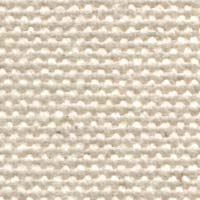
Canvas A heavy-duty, tightly woven fabric; rolls of specialty canvas are used in inkjet prints to produce Giclée canvas prints. After they are printed, the canvas is treated with a protective coating that guards against scratching, and dust and water damage.
Order online:
Mounted Artist Canvas
Rolled Artist Canvas |
 |
Canvas #12 A numbering system is used to differentiate between different weights of pure cotton canvas. #12 = approximately 12 oz per square yard of canvas. Gives the artist or printer a universal measurement by which to compare various canvas brands and styles.
Order online:
Unprimed #12 Canvas |
Canvas 7 oz. Any artist's canvas that weighs approximately 7 oz per square yard.
Order online:
Unprimed 7oz Canvas |
| Canvas Board Refers to canvases that are wrapped around a thin board instead of stretched over a wooden frame. These canvases are sturdy due to the backing, but are generally constructed from lower quality canvas fabric. They are easy to frame in a regular picture frame due to their thin depth. |
Canvas clips Thin metal clips that are used to hold a canvas in a frame without screwing in offset clips. The canvas clip has sharp teeth on one end which are pressed into the side of the frame's rabbet. The other side clips over the canvas, securing it. The clips are evenly distributed around the back of the frame.
Order online: Offset Clips |
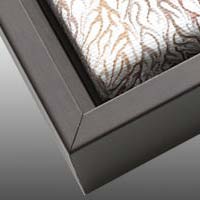
Canvas Floater A style of frame ideal for a gallery wrapped canvas print or original painting. This frame overlaps the artwork from behind (instead of in front like a traditional picture frame), where the wooden frame of the canvas is affixed to the floater frame. The floater frame surrounds the canvas, separated by a gap of approximately 1/4 inch on each side, creating a “floating” effect. Floater frames are available in a variety of styles, including “stair step”, “tapered” and “L shape”.
View our large collection of canvas floater frames. |
 |
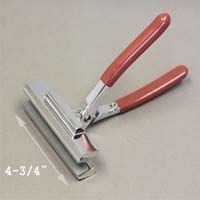
Canvas Pliers Used to stretch a canvas over and around a wooden stretcher bar frame. Once the canvas has been stapled to the back of one side of the frame, the next end of the canvas is held with the pliers and pulled tightly around the frame. While continuing to hold the canvas taut, staples are placed to affix the canvas to the frame.
Order online today: Canvas Pliers |
 |
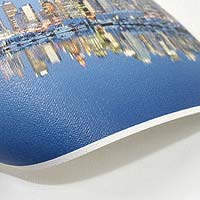
Canvas print A canvas print (also known as a stretched canvas) is an image printed onto canvas, generally with an inkjet printer, which is then stretched, framed and displayed.
Order your custom canvas print today. |
 |
Canvas transfer A process which lifts the image on a print off the paper support so that it can be transferred to a canvas mount.
Place an order online: Canvas Transfers |
| Cardstock A heavyweight, smooth and durable paper often used as a backing or crafting material. In printing, it is the common stock for business cards, and can also be used for book covers. |
| Casing nail Casing nails are similar to regular, box nails, but feature a more slender head that is not much wider than the wide of the body itself. Used for laying flooring, and other projects where the nail head will remain visible so must be as visually and physically unobtrusive as possible. |
| Cassese A commercial brand that produces and sells picture framing machines, including a variety of underpinners, choppers and miter saws. They invented the first framing wedge. |
| Cast paper An artistic technique that uses wood pulp or paper fiber to craft three dimensional sculptures using a mold. It may refer to full sculpture or relief designs. One example is papier-mache. |
Cedar Cedar is considered a soft softwood, and is native to the Himalayas and Mediterranean region. Cedar wood is known to repel moths, which can be helpful in protecting artwork. There are many different subspecies of Cedar, including Red, White, Spanish, and Atlantic.
These different types are grown in different parts of the world, and all have different grain patterns and colors ranging from a pale, pinkish-white to rich brown-red. |
| Center punch A tool like an awl that is used for denting wood or metal. The dent is made using a hammer on the end of the punch, and keeps the drill from slipping when a screw or hole is drilled |
| Certificate of Authenticity An important piece of paper that verifies the legitimacy of an artwork. The CoA proves that the piece is the original or limited edition print that it claims to be. If an artwork is to be resold, the COA is a required document to ensure proper pricing. |
| Certified Picture Framer (CPF) A framer who has received certification in professional picture framing. The exam tests five areas: preservation, general knowledge, mechanical, math and mounting, and is available to anyone who has worked in the profession for a year or longer. |
| Chamois A soft leather (or today, faux leather) cloth often used for buffing and shining surfaces that may easily be scratched. |
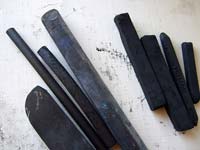
Charcoal A light-weight substance that is dark grey or black in color. It is made up of carbon and most commonly created by heating wood in the absence of oxygen.
In art, charcoal is used to shade and sketch. "Vine" charcoal is often used, which is made by burning sticks of wood into a variety of hardnesses, which leave sharper or softer lines. Powdered charcoal may be used to cover a large surface, and charcoal pencils are also available. |
 |
| Cherry A type of hardwood, though it more commonly refers to the finish or wash applied to wood. Real cherry wood is a rich brown with pink or deep red undertones. |
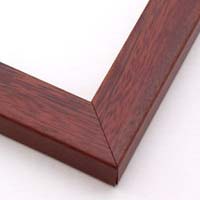 |
| Chestnut A type of hardwood that is very expensive due to over-harvesting in the early 20th century. It was praised for being very straight and resistant to rot. Today, no large enough trees exist, so the only real wood is reclaimed. More commonly, other wood is treated with a finish or wash to make it the color of chestnut wood - a deep, rich brown. |
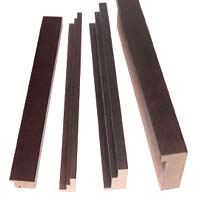
Chop (1) Verb: To cut or slice in fluid, repetitive motion, generally wood, with a sharp, straight blade. A chopper is used to cut wood picture frame and stretcher bar moldings at 45 degree angles in preparation for assembly.
(2) Noun: an uncut length of picture frame moulding that is ready to be mitered and constructed. |
 |
| Chop Mark The signature of the printer, applied to the prints produced in that workshop using a stamp or embossing. Much like the artist signs each piece. |
| Chopper The machine used to cut picture frame moldings and stretcher bar lengths. It may be controlled manually or by a motor. The knife blades of the chopper are angled at 45 degrees and meet at a point. The result is a 45 degree angle cut on both sides of the wood beam. |
| Cibachrome A photographic process that reproduces film images on photographic paper using multiple layers of dyes in a polyester base. As a result, the print is very resistant to fading and other damage over time. |
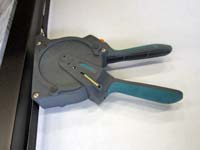
| Clamping A process of fastening two items together with a strong grip. Generally, a special tool called a clamp is used, which is tightened by twisting or pumping a lever until the required grip is achieved. In picture framing, clamps may be used to affix art temporarily to a board, or hold picture frame corners in place until an adhesive dries. |
| Clamps The tool used in fastening two items together with a strong grip. The tool is tightened by twisting or pumping a lever until the required grip is achieved. In picture framing, clamps may be used to affix art temporarily to a board, or hold picture frame corners in place until an adhesive dries. |
 |
| Climate control Climate control is important for preserving original and significant pieces of art. Changes in humidity and temperature can cause artwork to expand, warp, discolor or begin to flake. In addition to framing with high quality, archival-grade materials, climate control will protect the artwork for many generations. |
| Clip frame Generally refers to a "frameless" picture frame, wherein the image is pressed between two sheets of glass (or a sheet of glass and a stiff backing. The artwork is held in place with clips that hook into the backing and clamp over the edge of the glass at equal intervals around the perimeter. |
CNC Controller A CNC (Computer Numerical Control) controller is the central component of a CNC machine tool that interprets numerical instructions and coordinates the movement of machine components to perform machining operations. In laser engraving, a CNC controller processes digital design data and generates precise control signals that drive the movement of the laser beam across the workpiece surface.
The CNC controller coordinates the laser beam's speed, direction, and intensity, ensuring accurate engraving results according to the specified design parameters. By integrating advanced motion control algorithms and feedback mechanisms, CNC controllers enable precise and efficient laser engraving operations across a wide range of materials and applications. |
Coated wire A hanging wire popular in picture framing that is covered in a clear or opaque plastic coating. Coating the wire gives it some additional strength, protects it from fraying and makes it safer to handle.
Order online:
Plastic-coated Wire |
| Cold lamination Lamination is a process of permanently applying a clear plastic coating to paper. In cold lamination, the cover's adhesive is activated by pressure rather than heat. It is a safe option when laminating heat-sensitive images (any image that could be negatively affected by the application of heat), primarily papers printed with inkjet printers. Cold lamination also provides better UV protection than hot lamination. |
Cold-Press Paper Paper intended for watercolor painting that is textured. Paints are quickly absorbed into the paper, so blending is more difficult. Cold-press paper is an alternative to hot-press paper.
Works well for washes and detail paintings. Available in 300 and 640 gsm weights. |
Collage In photography, multiple photographs sharing space on the same gallery-wrapped canvas or framed print.
May also refer to an artwork created by securing pieces of paper, fabric or other materials onto a substrate. Though generally two-dimensional, it may have a sculptural effect.
Order a custom-made photo collage, created by our in-house designer. |
 |
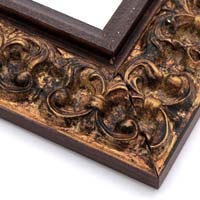
| Colonial Ornament An ornate decoration style common in picture frames. It is identified by leaf, fleur de lis and scroll elements and often finished in gold leaf or gold paint. |
 |
Color Calibration The measurement or adjustment of the way a device responds to the colors input to its system. In fine art printing, it is important that the designer's monitor is calibrated corrected so as to display the digital image as close to its original digital capture as possible. It is significant to note, however, that in the case of a reproduction, the original digital scan or photograph will not be identical to the physical artwork in color saturation.
Read more about color matching in art reproduction. |
| Color Triangle The primary colors arranged in a triangle, with one color at each corner. The additive color results are then blended within the rest of the triangle. For example: blue bleeding into yellow between those two corners, and yellow bleeding into red between those two colors. |
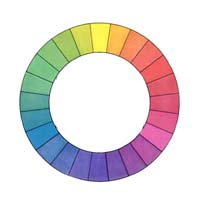
| Color Wheel Identifies the primary, secondary and tertiary colors and their relation to one another. More detailed color wheels show possible shades of each color, when mixed with varying amounts of white. |
 |
| Common nail Common nails are made from iron wire and have a thick, smooth body with a sharply pointed tip. The head of the nail is wide, generally about twice the width of the body. |
| Complementary colours A pair of colors that produce black when combined (or in the case of colored light, white). Placed side by side, this pair creates the greatest possible contract between the colors. Complementary color pairs in the RGB model: red and cyan; yellow and blue; magenta and green. |
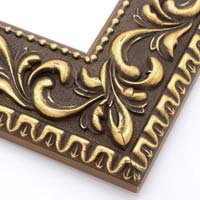
| Compo A shortened term for "composition ornamentation", a method of applying raised designs to a flat surface. In picture framing, it is the application of decoration to the frame face. A mold is made of the desired design, from clay or plaster, and then pressed onto the wood face. Once the entire piece is painted or otherwise finished, the molded design and the wood frame appear as a single piece. |
 |
| Composition The layout or arrangement of an artwork. The artist "composes" the work by determining where the visual elements should lie within the viewing space. Different arrangements, such as the main subject close to the viewer, or moved far back in the scene, lend different moods to the finished work. |
Conservation The act of preserving or protecting an artwork by taking various steps to ensure its longevity. The products used may include paper-free matboard, acid-free backing, and UV-resistant glazing and inks.
Order online:
Conservation Matboards
Acid-free Foam Board |
| Conservation Framing Conservation picture framing results in an archival quality display, and ensures that whatever processes are done to the art can be reversed without damaging the original piece. It requires the use of acid-free materials (paper, backing, adhesives) and UV-protective glass or plexiglass. |
| Conservator Also called a "conservator-restorer", this professional works on archival artworks, ensuring their survival through cleaning, restoration and proper display and storage. They are trained to recognize and eliminate damage and deterioration. |
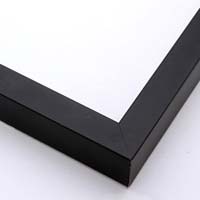
| Contemporary Ornament A modern style, usually featuring smooth lines and a simple, unadorned frame face. |
 |
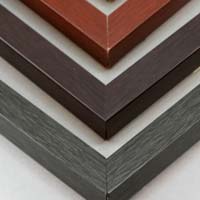
| Contemporary Style Picture frame decoration identified by a modern style. Generally featuring smooth lines and a simple, unadorned frame face. Contemporary frames come in a variety of finishes, and may be boldly colored, natural (wood grain) or metallic. |
 |
| Contrast Ratio Contrast ratio is a measure of the difference in brightness between the lightest and darkest parts of an image or display. It is typically expressed as a ratio, such as 1000:1, where the first number represents the luminance of the brightest area and the second number represents the luminance of the darkest area. In Giclée printing, contrast ratio is an important consideration for evaluating the dynamic range and visual impact of printed images, with higher contrast ratios generally indicating greater detail and depth. |
| Convex Glass Convex glass is pane glass that is curved outward into a dome shape. It was common as a picture frame cover in the early days of photography. Also referred to as "bubble glass." |
| Copyright A legal right that allows the owner of a product or service to retain singular ownership. Copyright grants the owner exclusivity in distribution and use and ensures they receive proper compensation for their product. |
 |
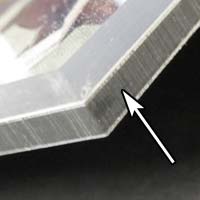
Core The internal material of an object. In picture framing, "core" refers to multiple materials:
1. the cotton fiber filling between the colored surface and backing of mat boards, which may be white or black. The part that is visible in the bevel along the opening.
2. Foam core, a lightweight but firm material used as the backing in framed artwork. It is constructed of a thin (approximately 1/4”) foam sheet sandwiched between layers of thick, generally glossy, paper. |
 |
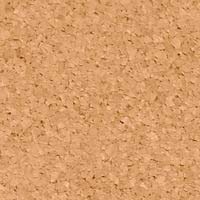
Cork Boards Any material, the surface of which is covered by a layer of sheet cork. The layer may be thick or thin, and is usually backed by MDF or cardboard, sometimes with a sheet of foam between the cork and backing.
Cork boards are generally used to display paper items using push pins or staples pressed into the cork surface. We offer cork board as a backing option for picture frames.
Order online: Cork Board |
 |
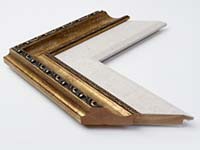
Corner samples In picture framing, a frame molding sample comprised of two short (generally 6"-8") pieces of molding cut at 45 degree angles and joined to represent the corner piece of a completed frame.
The sample can be laid against printed or original artworks to determine the best frame match.
The image shows two corner samples. |
 |
| Corner weld glue The glue used to affix picture frame molding at the corners. It is designed to dry quickly and clear, and excess can be easily removed with water. |
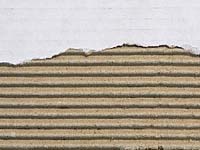
| Corrugated Cardboard Thick, sturdy paper comprised of two smooth layers with a layer of ridged paper in between. Used as a packing material and as a backing. |
 |
| Corrugated Corners Pre-formed, corrugated cardboard shapes that fit around the corners of picture frames and square edges to better protect fragile items. Corrugated cardboard is comprised of two layers of flat cardboard with a layer of ridged cardboard sandwiched between. |
Cotton A soft fiber made from the cotton plant. It is highly versatile, and in picture framing is used in mat boards, fine art papers and canvas.
This white vegetable fiber grown in warmer climates in many parts of the world, has been used to produce many types of fabric for hundreds of years. Cotton fabric feels good against the skin regardless of the temperature or the humidity. |
 |
| Cotton Linters The fine, silky pieces of cotton that stick to the cotton plant after the initial harvest (ginning). The paper manufacture from these pieces is called "rag mat". |
Cotton rag Paper made from 100% cotton fibre. Unlike most paper made from wood pulp, cotton rag paper is stronger, more durable, acid-free, and suitable for archival purposes.
Order online:
100% Cotton Matboard
Stretched Artist Canvas
Rolled Artist Canvas |
| Cracking A painting texture achieved by using a milk-like medium over the coat of paint that shrinks, causing the paint to crack. The result is an antiqued appearance on painted wood. |
| Craze The fine cracks that appear along the surface of acrylic sheeting and within hardened varnish when too much pressure has been applied. |
| Crazing The fine cracking that occurs along the surface of acrylic sheeting and within hardened varnish when too much pressure has been applied. |
| Cresent Matboards A long-standing, family-owned producer and seller of mat board, located in the United States. |
| Crimping Pliers A tool used to press metal together in order to flatten it. In picture framing, crimping pliers are used to close the small metal tubes ("crimping sleeves") through which both ends of the hanging wire is strung, an alternative to wrapping and twisting or knotting the wire. |
Crimping Sleeves The small metal tubes through which hanging wire is strung, to secure it to the frame. The wire is threaded through the sleeve, then into the hanger affixed to the frame, and then back through the sleeve. When the sleeve is crimped with crimping pliers, the wire is held tight between the flattened metal.
Order online: Crimping Sleeves |
| Cropping corners The action of trimming excess from the corners of an image or mat board, usually in order to make it fit better within the frame. The corners may be cut straight across, so a triangular piece is removed, or they may be rounded into a crescent shape. |
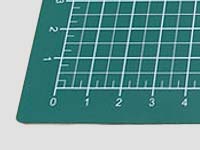
| Cutting Mats Thick plastic mats that serve as a protective surface when cutting with a utility blade. They are generally painted with a grid to ensure straight lines when cutting photographs, mat board or other paper products. |
 |
D ^^Top
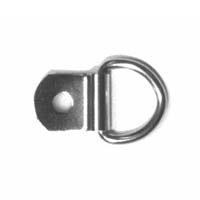
D ring Hanging hardware commonly used to hang picture frames and gallery wrapped canvases. This style of hanger has a D-shaped metal opening attached to a flat metal strip that can be nailed or screwed into the wood of the frame. Hanging wire is then strung between the rings on either side of the frame.
Order online: D-Ring Hangers |
 |
| Damp Refers to moisture naturally found in the air, which can damage artworks that are not conservation preserved. Proper materials and sealing of the framed piece is necessary to keep damp from working into the art. |
| De-acidifaction The removal of acidic properties from printing materials such as fine art paper. This is commonly done by a process called "alkaline washing". |
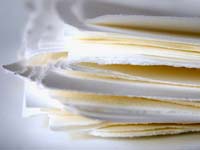
| Deckle Edge The feathery, uneven edge of some handmade or purposefully cut papers - common in old manuscript and book pages. Float mounting is ideal for these pieces, to fully highlight the historical significance of the style. |
 |
| Deterioration The process of components of a material breaking down or disintegrating. Proper archival preservation is ideal for important artworks to ensure deterioration is prevented for as long as possible. |
Diasec Diasec is a registered trademark for a process used for face-mounting prints like photographs on acrylic sheets. The process was invented by Heinz Sovilla-Brulhart in 1969.
Because of the different light penetration and refraction of acrylic compared to normal glass, the colours are more brilliant and the image sharper than compared to standard glass in a picture frame. A Diasec mount is usually of a high gloss finish. Because the print is glued to the acrylic glass, the result is a completely flat mount of the image.
Process
The process aims to mount the print without air bubbles or smears. The image is face mounted and bonded to the acrylic glass with a gel silicone sealant which acts as a glue.
Normally the print is placed on a carrier at the backside. This is usually dibond, a composite plate of aluminium and plastic. Aluminium or other materials are also possible. If the print has to be backlit, translucent materials are necessary. |
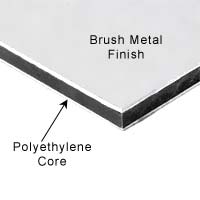
Dibond Brand name of a rigid sheeting coated on both sides with aluminium, surrounding a polyethylene core. Commonly used in dry mounting frameless artwork or photographs. It is archival quality.
Order online today:
Di Bond Mounting Board |
 |
Digital Archiving The act of ensuring that digital materials are properly preserved. Though digital material is not fragile in the way an original drawing is, it is easily lost, altered or corrupted, and must therefore be conserved for the future.
May also refer to the act of digitizing existing physical archives through scanning, database transfers and converting files to digital. |
| Digital File A piece of information that is stored on and available to a computer program. Digital files are the modern or computerized version of paper files used in the past. A file can be an image, computer code, or text. The extension of the file could be anything from .jpg or .png to .pdf or .docx. |
| Digital Images A piece of visual information that is stored on and available to a computer program. Digital images are the digital file of a photograph or computer-created image. Various extensions apply, including jpegs, portable network graphics (png), gifs, tiffs, and bitmaps. |
| Diptych An artistic image created on two separate panels that are hinged in the middle, so to be self-standing. Contemporary art that is divided onto two canvas or framed wall-hanging panels my be considered a Diptych as well. |
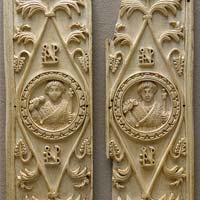 |
| DIY or Do-It-Yourself Refers to any project that does not require professional knowledge or assistance - most often crafts or home decor ideas that can be carried out with minimal tools and supplies for relatively low cost. |
| Double Bevel An ornamentation common on picture frames recognized by multiple sloped surfaces on the frame face. Often, the inner lip will be feature a double bevel, or both the outer edge and inner lip will be bevelled. |
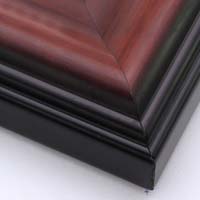 |
| Double Mat When mats are layered in a picture frame, the top mat forms the main border and the bottom mat shows slightly, just around the image (called the "reveal"). Double mats give an extra sense of depth to the framed piece. |
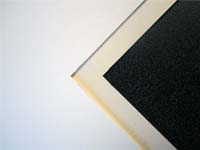 |
| Double Mitre Saws A saw with two angled blades that meet in a point, used for cutting picture frame moldings at a 45 degree angle. The use of two blades results in a 45 degree angle on both ends of the wood or metal molding once it is cut. |
Double primed canvas Canvas treated with two coats of lead paint, which acts as as a barrier to prevent the artist's paint from soaking into the fabric. Double primed canvas generally has a smoother surface and is stiffer. However, due to this stiffness, it can crack along the edges when stretched.
At KeenART media, the canvas we print on is specially treated for Giclée printing.
We also offer unprimed and double-primed artist canvas for sale. |
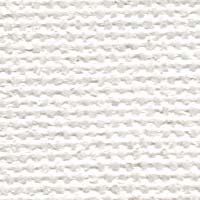 |
Double thickness mats Matboard that is approximately twice as thick as regular matboard (usually 8-ply instead of 4-ply). This extra thickness gives additional depth to the image, and creates a very sturdy border that will not warp or bend over time. Generally, this type of mat board is higher quality and price.
Order online:
8-ply Museum Core Madboard |
D ^^Top
Drill A drill is a tool fitted with a cutting tool attachment or driving tool attachment, usually a drill bit or driver bit, used for boring holes in various materials or fastening various materials together with the use of fasteners. |
| Drop Bottom An effect applied to a picture frame mat. Less is cut from the bottom border, so that it is slightly wider than the other sides. This is due to a optical illusion inherent in viewing images that makes the bottom mat appear thinner than the other sides when in fact all sides are the same. Also called "bottom weighting". |
Dry Mounting The use of a heat-activated adhesive to affix a paper print to a hard surface, such as foam core, Gatorboard or Dibond (a thin, aluminum sheet).
We offer dry mounting services on various substrates. |
| Drytac A company that creates and distributes adhesive coatings such as lamination sheeting and laminators, plaque mounting laminates and mounting adhesives. They service framing and graphic production businesses. |
 |
D ^^Top
Duck canvas A tightly woven, heavy, plain-weave, bottom-weight fabric with a hard, durable finish. The fabric is usually made of cotton. |
| Duck Grade A style or make of heavy, woven canvas fabric, made from cotton or linen. The threads of duck grade canvas are generally more tightly woven than those of plain canvas. |
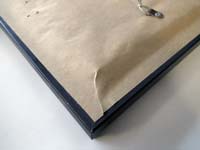
| Dust Cover Kraft or specialty paper which is adhered to the back of a picture frame once the contents have been fitted. This keeps dust, insects, humidity and other environmental factors from damaging the artwork. A dust cover also gives the frame a clean, professional look. |
 |
| Dust Cover Trimmer A handheld tool used to cut the excess from the dust cover or paper backing of a picture frame, once it has been adhered to the back of the frame. It is generally comprised of a recessed utility blade set within a plastic handle with an extended outer edge that runs along the side of the frame to keep the blade straight as it trims off the paper. |
Dye Sublimation Sublimation is a process where an image can be printed onto transfer paper using dye-based inks and then with heat and pressure become transferred into the substrate.
Dye sublimation on hard surface surfaces is possible if the surfaces have been coated. Instead of printing images directly on a surface, which may scratch easily, the image is infused into the coating to provide permanent protection and durability.
|
E ^^Top
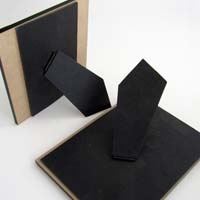
Easel backs A common backing in store-bought picture frames that has a fold out lip or arm against which the frame can lean at a suitable viewing angle, for tabletop display. |
 |
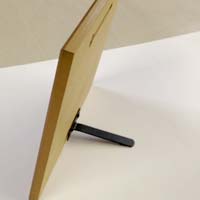
Easel mates A piece of hardware used to transform a wall hanging picture frame into a tabletop frame. The T-shaped metal rod is screwed in to the bottom back of the frame so that the extended leg can prop the frame up at a suitable viewing angle.
Order online: Easel Mate |
 |
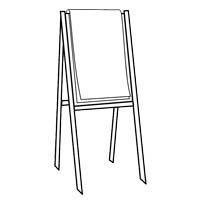
Easel Stand A stand commonly used for displaying framed artwork. A horizontal beam affixed to the front two legs supports the art. These legs meet a back vertical support at approximately a 20 degree angle, allowing the art to be propped against the two front-facing legs.
Traditionally constructed from wood, but now available in a wide range of materials including aluminium and plastic.
Order online:
Artist Easels |
 |
| Edition Refers to the run of a printed item, such as a book or artwork print. "Limited" edition prints and books will have only a set amount of copies produced. "First" edition is the first publication run or printing of a book or print. May also refer to different versions of a product (ie: 20th Anniversary Edition with additional pages). |
| Embellish(ing) The act of making a picture frame or other visual object more attractive by adding decoration or design. For example: a raised (relief) embellishment on the lip of a flat frame face. |
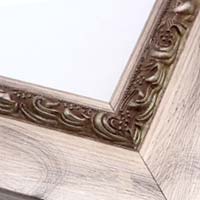 |
| Emboss(ing) The act of carving or sculpting a relief design out of a material. For example: a picture frame embossed with a scroll and leaf decoration. |
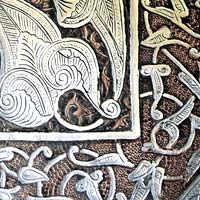 |
| Embossed Ornament Any picture frame with a relief (raised) design on the face. The design may be carved or stamped into the wood, or into a clay layer laid over the wood base. The resulting design is then painted or otherwise finished. |
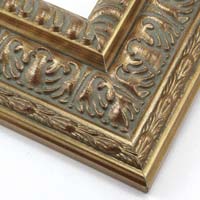 |
| Emery A coarse mineral mixture most commonly affixed to a flat board to serve as an abrasive for smoothing or polishing rough edges/surfaces. |
| Enamel A high-shine, semi-transparent or opaque liquid coating applied to wood, plastic and other surfaces, which dries hard to provide protection and ornamentation. Also referred to as lacquer, varnish or glaze. |
| Engraving The process of carving or cutting an image or text design into a hard surface, most often wood, metal or glass. The result is a decoration in reverse-relief (cut in, not raised out) on the face of the object. |
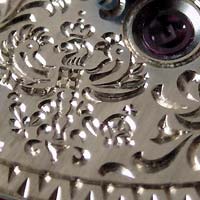 |
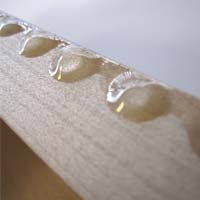
Epoxy resin A clear, viscous coating made from synthetic polymers that is applied to a surface. The resin hardens into a shiny, glass-like coating. Many epoxy resins are self-levelling, which means a flat surface will form without manually spreading the liquid.
Order Online: Epoxy Resin Ex-74
Learn more about our variety of resin coating services.
Read more in our article: Epoxy Resin Coatings |
 |
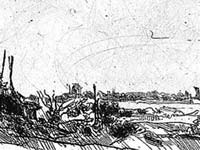
Etching Traditionally, a process of engraving - most commonly glass, stone or metal - by using a needle to scratch through a protective coating, then adding acid to eat away at the exposed sections, without affecting the protected area. Used on metal plates that were then inked and applied to paper to create a print.
Also refers directly to the print created from an etched plate.
Today, may refer in general to the act of scratching a design into a hard surface. |
 |
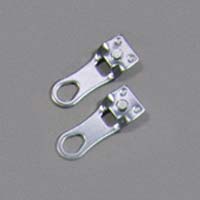
Euro Hanger Hardware used to hang metal picture frames. A hanger is inserted into either side of the frame, 1/3 of the height from the top. A screw is turned to hold the hanger in place, and wire is then threaded between the two hangers.
Order online:
Metal Frame Hangers |
 |
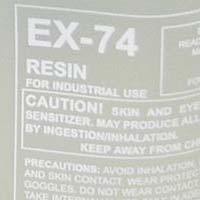
EX-74 Resin A liquid coating that, when applied to a flat surface, will harden into a clear, high gloss, protective cover that is resistant to fading and discoloration caused by UV exposure. It is waterproof and heat-resistant once set.
Order Online: Epoxy Resin Ex-74
Read more: Epoxy Resin Coatings |
 |
| Extrusion The process of drawing or forcing a material through a mold or die of the desired cross section in order to achieve the shape desired. This is done with metals, clay, ceramics and much more, and results in multiple copies of an identical item. |
F ^^Top
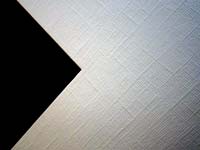
Fabric mat A picture framing mat border that is covered with a fabric surface for a unique and textured look. Can be purchased or done by hand using a regular mat board.
May also refer to a linen liner - a mat options for canvases, constructed from wood and covered with a cotton or linen surface and optional metallic lip. Intended for framed displays without glass. |
 |
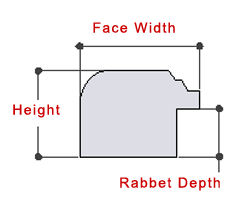
| Face Width The face of the picture frame (or molding) is the part of the frame you can see when standing directly in front of it while it hangs on the wall. It includes only the frame itself, not the space between the sides, nor the artwork within. The face is generally the decorated or sculpted part of the frame. The frame face width refers to the measurement from the outer edge of one side to the inner edge of the same side. It does not include the perpendicular edge (the height). |
 |
| Fade Resistant A material that naturally, or when treated with a substance, resists discoloration and dulling over time. Many conservation-grade inks, mats and fine art papers are guaranteed to retain their original color for many years, therefore preserving the artwork in its original condition. |
| Fade(ing) To lose or cause to lose brightness or brilliance or definition of line, form and color. |
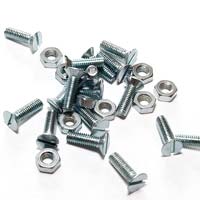
Fastener Any piece of hardware that affixes one object to another. This includes, screws, clips, hooks and Velcro or adhesives.
Order online: Framing Hardware |
 |
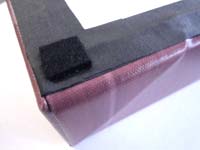
Felt Bumpers A small, soft square of self-adhesive felt that is placed in the bottom corners of a picture frame or canvas print to keep the artwork from scratching or scuffing the wall when hung. Rubber and foam bumpers are also available. May also be called bumps.
Order online: Felt Bumpers, Black 100 ct
Felt Bumpers, Black, 1000 ct |
 |
Fiber Paper Used in the creation of photographic prints, fiber-based papers are coated with a substance called baryta (a mixture of barium sulfate and strontium). This treatment brightens the paper, or tints may be added to subtle color. Fiber paper usually has a gelatin layer as well, which protects the paper during processing. Most often, these kinds of paper are used when the photographer requires high-quality, long lasting prints for exhibition or sale.
Fiber-based papers are also available for digital printing, considered ideal for producing beautiful black and white photographic images with excellent grey tones. Baryta is added to the ink-receptive coating in order to achieve the same effect as traditional papers. |
| File Format The type of extension (the letters following the . ) applied to a computerized, digital file. The format determines the way the information is stored, and what program is required to access it. Popular file formats include: .pdf, .jpg, .doc, .txt, .zip |
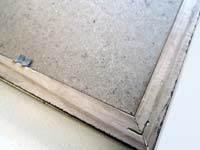
| Filler Board The rigid backing inserted into a picture frame behind the image, in order to protect the image and use up the remaining space in the rabbet that isn't required for the glazing (glass), mat and artwork. Foam core and cardboard are common filler boards. The points or brads that secure the work within the frame will press against this board. If a dust cover is applied, it will be laid over the filler board. |
 |
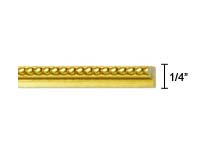
| Fillet Thin, decorative pieces of picture frame molding. They may be inserted between the frame lip and the glass, the canvas and the liner, or the mat and the artwork. A fillet adds an extra decorative element to a framed artwork. |
 |
| Fillet chopper A machine designed to cut lip liners and fillets - additional decorative border elements in some picture frames. The blades cut the thin pieces of wood at a 45 degree angle so they can be easily inserted into the picture frame. |
| Fine art Any of the visual arts, including painting, drawing, printmaking, sculpture and some performance art. The term generally excludes other art forms such as poetry, literature, dance and music. |
 |
Fine Art Papers There is a huge variety of fine art papers available for digital printing. Much like fabrics, they vary depending on their intended application and the printer/ink that will be used to produce them. These papers will almost always be archival or conservation quality, which means they are free from acid, chlorine, and lignin (a natural polymer found in wood that causes deterioration), and buffered to achieve a neutral pH prior to being coating for the printer.
Fine art paper is generally 100% cotton, though cotton blends do exist. It is available in many different surface textures from smooth to as rough as watercolor paper, and finishes such as matte, satin, and gloss. The color of the paper will also vary by material and manufacturer, from a cool blue-white to a soft, almost off-white.
Order online: Fine Art Prints |
Fine Art Reproduction The process of photographing or scanning original artworks and digitally color matching them, and then printing copies with a high quality - usually giclée - printer on conservation-grade (archival) paper or canvas.
We offer high quality fine art print reproductions of your favorite artwork. |
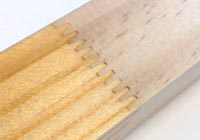
| Finger-jointed Refers to the way pieces of molding and stretcher bar wood are connected. Shorter pieces joined by thin, interlocking teeth will produce a straighter, stronger length than a long, complete beam of wood. This method also reduces the waste of smaller wood pieces. |
 |
| Finish nail Small, slender nails with a head barely wider than the body. Used for final attachments in carpentry, when the nail will remain visible. |
| Finishing The final processes in preparing a fine art print or wrapped canvas for display. This may include fitting the artwork into the frame, attaching hanging hardware and affixing dust covers or cloth tape to the back of the frame. |
| First Surface Mirror or FSM A first surface mirror or front surface mirror is a mirror with the reflective surface being above a backing, as opposed to the conventional, second surface mirror with the reflective surface behind a transparent substrate such as glass or acrylic. |
| Fitting The act of securing your artwork bundle (plexiglass, mat, art, backing) in the frame. Glazier points, thin metal tabs or nails may be pressed into the wood of the frame against the backing, using a hammer or other tool. Alternately, turn buttons can be affixed to the back of the frame, which allow for simple removal and replacement of the art. For more information, read our Frame Fitting article. |
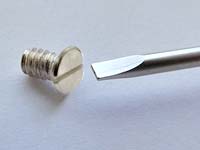
| Flat Head Screwdriver A tool used for tightening and loosening slotted screws. |
 |
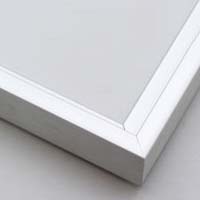
| Flat Top Metal Frames Refers to any metal picture frame that has a flat face, rather than an arched, rounded or curved face. |
 |
| Fletcher-Terry A company that designs and distributes framing production materials and machines. Point drivers, glass cutters, miter saws, underpinners, and more. |
 |
| Float Glass A picture frame style with no backing. The image is sandwiched between two panes of clear glass or plexiglass, with extra glass left around as a border, so that the image appears to float within the frame. |
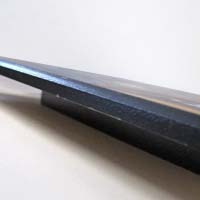
| Float Mounting A picture framing style that creates a shadow between the image and the backing. The artwork is raised off the backing with a panel concealed behind the image. The glass and frame are cut larger than the artwork so the backing (often mat board) is visible as a recessed border. A frame with a deep rabbet is required for this style. |
 |
| Float(ing) A means of securing artwork to a rigid support so that all edges are visible. |
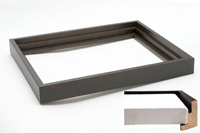
Floater Frame (also called a "Canvas Floater") A style of frame ideal for a gallery wrapped canvas print or original painting. This frame overlaps the artwork from behind (instead of in front like a traditional picture frame), where the wooden frame of the canvas is affixed to the floater frame. The floater frame surrounds the canvas, separated by a gap of approximately 1/4 inch on each side, creating a “floating” effect. Floater frames are available in a variety of styles, including “stair step”, “tapered” and “L shape”.
Order online: Canvas Floater Frames. |
 |
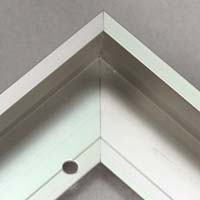
Floater Metal Frames A canvas floater-style frame constructed of metal. Generally consisting of simple, modern lines and a narrow face.
A canvas is secured from the back in a floater frame, while the border sits around the canvas, but does not overlap. A small gap of 1/4" is usually left between the edge of the canvas and the frame.
Order online: Metal Floater Frames. |
 |
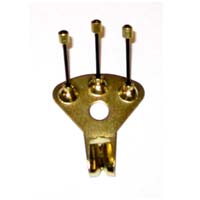
Floreat hangers A type of metal hardware affixed to the wall and used to hang artwork. The flush edge is laid against the wall and nailed in place with one to three nails, depending on the size of the hanger and the weight it is required to support. A tab extends out from the wall, onto which the artwork's wire or hanger is hung. Floreat hangers are constructed so as not to damage the wall beyond the nail holes.
Order online: Floreat Wall Hangers |
 |
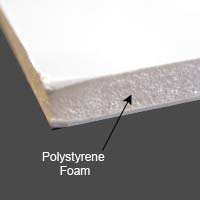
Foam Board (Same as Foam Core) A light but firm material used as the backing in framed artwork. It is constructed of a thin (approximately 1/4”) foam sheet sandwiched between layers of thick, generally glossy, paper. Prints can also be dry mounted to the foam core surface.
Order online:
3/16 inch Foam Board
1/2 inch Foam Board |
Foam Core (Same as Foam Board) A light but firm material used as the backing in framed artwork. It is constructed of a thin (approximately 1/4”) foam sheet sandwiched between layers of thick, generally glossy, paper. Prints can also be dry mounted to the foam core surface.
Order online:
3/16 inch Foam Core Board
1/2 inch Foam Core Board |
 |
| Fotiou moulding A picture frame production and distribution company based in Ontario, Canada that offers high quality wood mouldings in a variety of finishes and colors. |
 |
| Foxing The appearance of rust-colored spots on the paper of an artwork, caused by poor quality materials and mold growth. Caused by high humidity, light and the presence of acid in the framing materials. |
 |
Frame assembly The process of putting together a picture frame. In the case of wood frames, this involves the use of an underpinner to insert V nails, and is generally carried out by the framer.
However, metal frames may need to be assembled - or re-assembled - by the customer. The process requires a screwdriver, measuring tape and the proper hardware, which will be provided by the framer. See our how to guide for detailed instructions. |
| Frame Height The distance between the back of the frame and the frame face, or the amount the frame will protrude from the wall. |
|
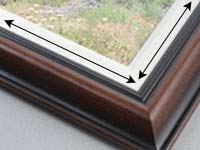
Frame Size Refers to the dimensions of the matted artwork that will be placed in the picture frame. For example, if the artwork is 8x10", with a 2" mat, the frame size is 12x14".
The framer will automatically add an additional 1/8" to both dimensions to allow for expansion of the art over time. This additional amount is not included in the frame size. |
 |
| Frameless A style of framing that uses clips around the outside of the frame, or an adhesive, to hold the image between the glass and the backing, without the use of a frame border. Creates a clean, modern look. |
| Framerica moulding A maker of high quality wood and metal picture frame mouldings, wood flooring and architectural trims. |
 |
| Freestanding Any object capable of supporting its own weight and standing upright without the aid of a secondary support or hanging wire. |
| French Mat A mat style that features additional decorative elements applied directly to the mat. The inner edge may be painted a different color, an inner groove may be cut approximately a 1/2 inch from the inner edge (a secondary bevel), or lines of varying thickness may be drawn to create in an illusion of depth and add interest. |
| FRP Fibre-reinforced plastic (FRP) is a composite material made of a polymer matrix reinforced with fibres. |
| Fugitive Colors Non-permanent pigment inks that will change color or their physical appearance when exposed to certain environmental conditions, such as light, over time. Intended for temporary projects or projects where fading is desired. |
| Full length moulding Picture frame mouldings as they are received by the framer. Generally shipped in lengths of eight or more feet. The framer will then cut the lengths down to the size required for the custom picture frame order. |
G ^^Top
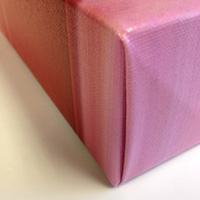
Gallery wrap Gallery wrapping is the method of stretching an artist's canvas so that the canvas wraps around the sides of a wooden frame (called stretcher bars or strainer bars), and securing it to the back.The result is that the hardware (staples or tacks) used for securing the canvas is not visible from the front or sides.
The sides of the canvas are prepared and primed in the same manner as the face. They may be painted a solid color, or painted to continue the image appearing on the face. This method of stretching and preparing a canvas allows for a frameless presentation of the finished painting.
In canvas printing, the term “gallery wrap” refers to an image that appears on the sides of the frame as well as the front. The image on the sides is either a continuation or a reflection of the main image.
Order your gallery wrapped canvas print online today! |
 |
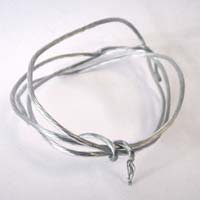
Galvanized Steel Wire Galvanization creates a protective zinc coating on steel wire, which keeps the wire from rusting.
In picture framing, galvanized wire is often affixed to the frame to allow it to hang on the wall.
Order online today:
Picture Hanging Wire |
 |
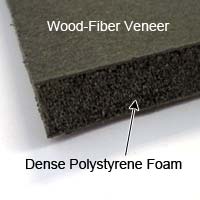
Gatorboard A panel composed of a thin sheet of dense foam sandwiched between several layers of thick paper. The result is an extremely rigid and durable base for dry mounting fine art prints and photographs, and lamination.
Order online:
3/16 inch Gatorboard
1/2 inch Gatorboard |
 |
Gel Medium Also called acrylic gel medium.
A thick, usually transparent substance that is used to alter the consistency or appearance of acrylic paints. Depending on the type used, a gel medium can add or reduce gloss, adhere mixed media or extend the amount of paint.
Gel medium is available in matte, gloss and semi-gloss and some are self-levelling (when poured, create a smooth surface without manual smoothing).
When used on their own, gel medium creates a textured surface on canvas prints that dries clear, effectively enhancing brush strokes and highlighting portions of the art where the application is thicker. |
Gelatin A collagen-based substance made from animal by-products. It is best known in its gelatinous form, but actually beings as a brittle, translucent sheet or flakes.
In photography, gelatin can be used in the gelatin silver process. This process involves silver particles mixed with gelatin, which then coat a surface such as glass or paper, used to record the image. The photographic material will be stable for many years with this coating, and the images can be developed after long periods of time. |
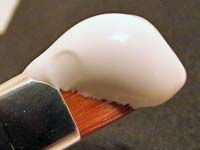
Gesso A chalk-based paint mixture that is used to create texture on canvas surfaces prior to, or in lieu of, painting. Due to its absorbency, it can serve as a base for most types of paint.
Modern acrylic "Gesso" is actually a combination of Calcium Carbonate with an acrylic polymer medium latex, a pigment and other chemicals that ensure flexibility, and ensure long archival life.
It is also used as a base on sculptural work, wall paintings and wood panelling, or for priming blank canvas prior to oil painting. |
 |
| Gesso True "True Gesso" is a brand that produces fine art canvas panels already treated with the protective gesso coating. The canvas is treated on both sides, and is suitable for painting with egg tempura and acrylics. |
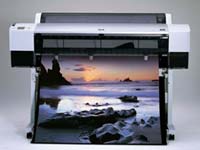
Giclée (gee-clay) A digital fine art print made with an inkjet printer. The term is derived from the French gicler (to spray), and refers to the spraying of ink from an inkjet printer onto the printed surface. The earliest giclées were made using Iris printers, which sprayed microscopic drops of color onto a fine art paper or canvas. Capable of displaying the full color spectrum, these artworks have vibrant, brilliant colors, and a velvety texture. This gives the finished product the look and texture of an original painting.
Browse our selection of Giclée canvas prints, and order yours today. |
 |
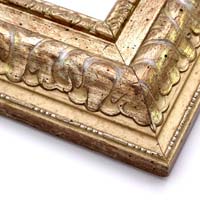
| Gilded frames A picture frame with decorative elements on the face created by adding gold - by the use of gold leaf, or paint - resulting in a high-sheen, classic finish. |
 |
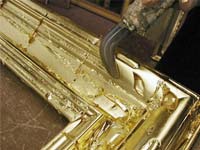
| Gilding The act of adding gold - by the use of gold leaf, or paint - to a picture frame face, resulting in a high-sheen, classic finish. |
 |
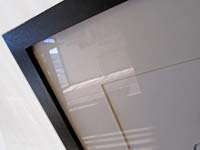
| Glare The often-interfering result of the reflective properties of glass or plexiglass. Glare reflects light or images on the clear cover of a picture, obscuring the image within. Non-glare glass and plexiglass is available, which eliminates most of the reflection, but can also dim colors in the painting or photograph. It is not recommended for high color artworks. |
 |
Glass cutter A machine, generally hand operated, that is used to score glass or plexiglass with a sharp blade, along the desired edge. Once scored, the cover can be snapped along the indentation.
Glass cutters can take many forms. Small, hand-held utility blades may be run along a straightedge. Tabletop and upright versions exist as well, which require the user to press and drag the blade along the glass. |
| Glass Etch A decorative picture framing technique which involves carving letters or images into the glass that will enclose the framed image. Various methods exist, including sandblasting, etching cream and hand etching. |
| Glass plate Another name for a sheet of glass. Refers to the complete piece of clear cover, generally once it is cut to size. |
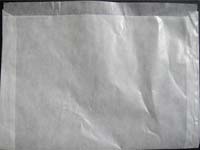
Glassine A thin, clear cover made of paper, that is used in archives to protect stored paintings. It it air, water, and grease resistant, while still allowing visibility.
Glassine is similar to wax paper, and a tinted version is commonly sold as envelopes for stamps and food. |
 |
Glazing (1) A technique of applying oil or acrylic color in thin, transparent layers so that the color beneath shows through, modifying the color of the glaze.
(2) The clear cover placed over an artwork within a frame; this may be plastic, plexiglass or real glass. |
Glued plywood Glued plywood is a multilayer wood material, which is sheets of peeled veneer
glued together. Usually plywood is formed from an odd number of veneer sheets. |
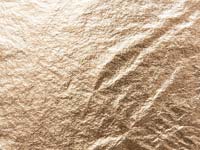
Gold Leaf Real gold that is hammered into a thin, flat sheet and applied over a surface. Gold Leaf gives a picture frame or other art piece the effect of real gold, for a lower cost than a solid gold item.
"Gilding" generally refers to the application of Gold Leaf. |
 |
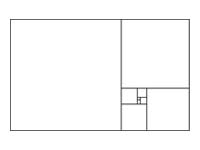
Golden ratio A mathematical concept utilized in art to achieve a visually harmonious composition. It was largely used by Leonardo da Vinci.
The radio of 1:1.6 results in a slightly asymmetrical layout that is widely considered satisfying to the viewer. |
 |
| Gridwall A simple, commercial display system made up of a wire mesh screen. Framed artwork can be hung anywhere on the screen, which is generally self standing. Popular for trade shows and exhibitions, as well as show rooms, because they require no holes in the walls. |
| Gridwall panels A metal grid that can be hung on a wall and used for displaying goods. |
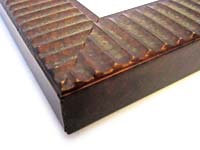
Grooved moulding (1) A style of picture frame face that features undulations or dips carved into the wood.
(2) Lengths of picture framing wood or metal with an indentation in the back, used to affix one piece to another. |
 |
| Gsm Grams per square meter. A metric measurement of paper density or "weight". |
H ^^Top
Hand Perforator A small, hand-held tool much like a utility knife that features a rotating, flat-toothed saw instead of a blade. When pressed and dragged across paper, the head of the tool creates evenly spaced holes or dashes in the paper, allowing it to be easily torn in a straight line at a later date. |
| Handmade Oil Paintings Any original painting done completely by hand (without digital assistance) using oil-based paints. At KeenART Media, we offer high-quality, beautifully executed handmade oil paintings of any digital image, created by talented artists. |
 |
Hardware The varying collection of screws, offset clips, wire, hooks and hangers the customer will receive with which to prepare their finished artwork for hanging, and affix it to the wall.
Order online today: Framing Hardware |
Hardwood The wood of any broadleaf tree species whose seeds have a cover, in the form of apples or nuts, for instance; most are deciduous, which means they loose their leaves in the winter (ie: not evergreens/conifers). The most commonly used hardwoods in picture framing include basswood and ramin.
Hardwoods are more difficult to scratch, and tend to have a clearer grain. They are considered more attractive, hence their use in picture frames.
The designation "hardwood" does not refer to the actual density of the wood. In fact, most woods used in picture framing are quite soft. |
Heat presses A machine designed to press and apply heat to paper inserted between its surfaces. Used in lamination, to set or cure certain inks, or for applying heat-sensitive paper images to fabric or other material.
Have your favourite image immortalized with a dry mount. We offer a variety of heat press services. |
Hemlock wood Hemlock is a light brown wood with a primarily straight grain that occasionally features spirals. Often used as timber to build houses, Eastern and Western Hemlock trees are found in great quantity in North America.
Hemlock holds paint and glue well, perhaps due to the lack of resin canals in the grain. It also stays together well when nailed. Hemlock is a popular wood for picture framing. |
High-Resolution Image High-resolution = high quality.
If an image is high-resolution, this implies it will print well at a large - or at least the desired - size, with clear, crisp detail and no pixelation.
There is no single determination of high resolution. The size of the digital image must be comparable to the desired print size, but the quality must be good as well. For instance, a high ppi or dpi (pixels or dots per inch) but a small image (300x300 pixels) will not print well at any size.
However, a large size (3000x3000 pixels) and good dpi (300) does not guarantee quality either - the image could simply have been changed to these quantities with no regard for image quality, resulting in heavily pixelation (clusters of visible squares instead of a smooth image).
Ideally, the customer should confirm with the designer that their image is the appropriate resolution or quality for the print size. |
High-Resolution Scan A good quality digital image created from copying the artwork using a flatbed scanner. This is achieved by scanning the entire image at one time, or ensuring even light distribution when scanning multiple sections.
We can create a high-resolution digital images from any original artwork. View our artwork scanning services and place your order today. |
Hinged frames Any multi-image picture frame with sections connected by bendable hinges. Most hinged frames are self-standing.
May be referred to as a diptych (two sections) or triptych (three sections). |
| Hinges A hinge is used to affix artwork to a backing or mat before placing it in the frame. Generally, double sided tape or cloth tape is applied only at the center top of the image. (Alternately, rice starch or adhesive hinging tissue may be used.) This holds the artwork in place, but allows the contents to expand and shrink as they inevitably will. |
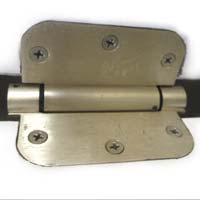 |
| Hinging The process of adhering artwork to a backing or mounting board. Acid-free tape is attached to the top of the work and another strip is placed over the top to secure it on both surfaces. Try to hinge only from the top so the artwork is able to hang freely. This helps prevent the piece from buckling, as it enables the different components — artwork, frame, mat, mounting board, etc. — to expand and contract at their own rates with the temperature and humidity. |
Hook The hook is the part of the hanging hardware that is attached to the wall, on which the artwork is hung. The most common style have a flat section which lies flush against the wall and is nailed or screwed in place. A curved lip below the nail protrudes to hold the wire or hanger that is attached to the frame/canvas.
Order online: Picture Wall Hooks |
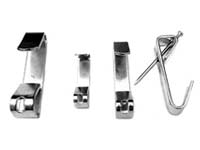 |
Hot lamination Lamination is a process of permanently applying a clear plastic coating to paper. In hot lamination, the cover\'s adhesive is activated by heat. When inserted into the laminator, the clear cover is melted onto and around the paper, completely enclosing it in a protective casing. Hot lamination produces a product more resistant to wear and tear than cold lamination.
We offer three types of large format lamination as part of our dry mounting service. |
Hot-press Paper Paper intended for watercolor painting that is extremely smooth with no surface texture. Paints rest on the surface for a length of time, allowing the artist to maneuver the paint more before it is absorbed.
Hot-press paper is an alternative to cold-press paper. It works best for detail paintings and is most widely available at 300 gsm weight. |
| Hue A color or shade. For example: Blue, grey, maroon. |
Hygroscopic The readiness of a material to absorb and retain moisture, generally in relation to humidity.
A hygroscope, for instance, measures changes in humidity in the air or a substance.
In archival picture framing, a hygroscope is an important tool, as changes in humidity can cause mold growth on artworks. |
I ^^Top
Indenting overmats A mat with an inside edge that has been pressed or stamped with a scoop or bevel indentation. This adds extra depth and interest to the matted artwork. |
| Infrared Energy Light waves that can heat and therefore dry out artwork over a period of time, speeding up the decay process. Sunlight and tungsten have infrared energy. Ideally, artwork should be kept out of direct light. |
| Ink and print fading time To lose or cause to lose brightness or brilliance. The fading time of ink jet ink is a direct result of the inks that you choose, as well as the environment where the print is displayed. All dye-based inks fade noticeably under direct sunlight and in interior applications where direct sunlight may fall on the image, and/or, where fluorescent or other UV lighting is present. Although the fading process is inherent in all ink jet inks, certain UV enhanced inks, pigment-based inks, and UV inhibiting coatings will extend the longevity of ink color. |
Inkjet Canvas Artist canvas that is specially coated to be printed on using an inkjet printer. The type of coating used will vary from brand to brand, but can result in a canvas that is water-resistant, fast-drying, and/or acid-free (conservation-grade). Additionally, the coatings must be flexible, as canvas prints are generally stretched over a wooden frame.
There are 100% cotton and poly-cotton inkjet canvases available. 100% cotton has a richer texture, but the color can vary along the roll. Poly-cotton canvas is very consistent from print to print, but may have less texture. |
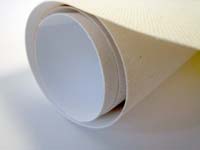 |
| Inlaid frames A subtractive technique most commonly used on natural wood frames, where the decorative design is carved or stamped into the frame face rather than added to it, resulting in reverse-relief ornamentation. The frame is then finished with varnish or paint. |
| Inlay A subtractive technique; the carving or stamping of a design into a flat surface, resulting in a reverse-relief decoration. |
 |
| Inlay Mat Used to create the look of a double mat in a single layer. Rather than stacking the mats on top of one another and cutting the bottom mat opening slightly smaller than the top mat, the exposed area ("reveal") of the bottom mat is cut out and affixed inside the top mat opening, creating a single mat layer with two colors. |
| Inner mat If a framed artwork has a double mat (a top mat, usually 2" wide, and a bottom mat with a reveal of approximately 1/2"), "inner mat" refers to the bottom mat, of which only a small amount is seen. |
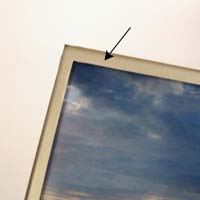 |
| Inner space The dimensions of the mat opening, or the space between the picture frame sides when no mat is used. These are the dimensions of your artwork that will be visible. |
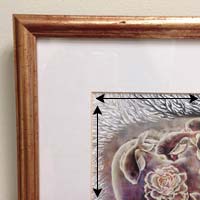 |
| Inside size This is the measurement of the space into which your artwork will be placed. If the frame is intended for an 11x14" image, the inside size will likely be approximately 11 1/8" x 14 1/8". 1/16" is added to each side to accommodate the potential expansion of the contents due to humidity and temperature changes. |
Invasive Mounting Any method of affixing artwork to another surface that cannot be undone. Once the adhesive or glue is applied, a residue from the substance will remain on the artwork.
Invasive mounting methods are not conservation-grade. |
J ^^Top
Japanese Paper A strong, thin paper (generally made from rice starch) often used for hinging artwork to a backing or mat prior to fitting. Japanese paper is pH neutral (acid-free), and therefore will not discolor or lose its adhesion over time. |
Jersey Frame A shallow shadow box frame with a gap between the glass and the backing, into which sports memorabilia such as a jersey may be placed and displayed.
The jersey is pinned flat into the frame against a corresponding color backing, often accompanied by related collectors cards or photographs. The frame is then sealed and displayed, and the contents are protected from dust and damage. If proper archival-quality materials are used, this style of display will also prevent the fabric of the jersey from fading or yellowing over time.
Order online: Jersey Frame |
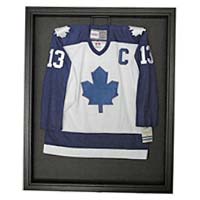 |
Joining The process of connecting one piece to another. In picture framing, this refers to arms of the picture frame or stretcher bar frame.
Generally, a thin coat of glue is first applied to each mitered (45 degree angle) piece. The two pieces are then inserted into an underpinner machine, which fires V nails into back side of the corner piece at specified intervals. |
Jpeg or jpg A digital format used for images. Jpegs are considered "lossy" file types, which means that when the image data is compressed (for easier storage and transfer), some detail may be lost.
Though jpegs are perfectly acceptable for printing and can produce a quality printed image, they are not as highly recommended as TIFF files. |
K ^^Top
Keystone mat A picture framing mat with a detailed inner edge featuring a cut out in each corner.
This cut out may be set in a cm or so from the inner edge, or could be cut directly out of the edge. |
| Kobe Corner A picture frame or mat corner style recognizable by the curved "m" shape of the corner. The interior point extends a small way into the opening at a 45 degree angle - between the horizontal and vertical frame arms. |
| Kraft paper A strong paper, usually brown in color, that is often used for wrapping shipping packages. In picture framing, it is commonly used as a dust cover, affixed to the back of a picture frame with paper tape. |
L ^^Top
L Shape Floaters A canvas floater frame style, the profile of which is an "L" shape. This type of floater frame does not have a raised step to designate the gap between frame and canvas. As a result, this frame style is generally cut 1/2" larger than the canvas to allow for the "floating" effect.
Browse our full collection of . |
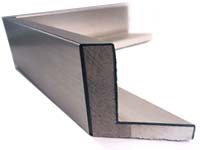 |
| Lacquer A high-shine, semi-transparent or opaque liquid coating applied to wood, plastic and other surfaces, which dries hard to provide protection and tinted color. Also referred to as enamel, varnish or glaze. |
| Lamination Lamination is a process of bonding thin layers of material together to create a composite structure with improved strength, durability, and surface properties. In printing and graphic arts, lamination involves applying a thin layer of clear plastic film, such as polyester or polypropylene, to the surface of printed materials using heat and pressure. Lamination protects printed materials from moisture, abrasion, UV radiation, and other environmental factors, extending their lifespan and enhancing their appearance. Laminated prints are commonly used for outdoor signage, banners, posters, menus, ID cards, and other applications requiring durability and weather resistance. |
Landscape Orientation Refers to the angle at which the framed or canvas image is hung. Landscape oriented images are those displayed lengthwise, so that the top edge (parallel to the floor) is the long dimension of the painting, and the side edge is the short dimension.
Also referred to as "horizontal orientation".
The opposite of "portrait orientation". |
 |
Lap Lines Refers to the visible lines at the meeting point of picture frame edges. These lines may be at a 45 degree diagonal if the edges were mitered before joining. They may also be vertical and horizontal if lap joints were used.
May also refer to "lap marks", which are the ridges visible after painting if one section was left to dry and then overlapped when the second section was painted. |
| Lap-joint Two materials connected by overlapping. A groove is cut in the top of one piece and the bottom of the other, so they fit together and create a flush surface. |
| Lap-joint frames A frame that is connected by overlapping at the corners. A groove is cut in the top of one piece and the bottom of the other, so they fit together and create a flush surface. In a half-lap, the two pieces meet at their edges, resulting in a 90 degree outer edge. In a cross-lap, the groove of one or both pieces is set in from the edge so the corners create a cross or X design. Common in rustic-style frames. |
| Larson Juhl A frame moulding design company located in the United States. |
 |
Lifting (1) Lifting Out: a process of removing paint from the canvas in order to create highlights. This is done with a brush, sponge or cloth.
(2)Acrylic Gel Lift: A process by which a photographic print can be transferred to a different surface. The entire inkjet printed image can be transferred to wood, canvas, glass or stone. |
| Lignin A wood-derived polymer found in many printing papers. Papers containing lignin are not conservative (archival), because the lignin causes the paper produce acids which can damage art over time. |
| Lignin-Free Fine art papers that are not treated with the wood-derived polymer Lignin. As lignin can discolor and damage artwork overtime, lignin-free papers are usually archival and safe for conservation framing. |
| Limited Edition Print When an artist prints a run of the same image, they determine how many of that image are to be printed. If they choose to print only 100, or 1000 copies of one image, it is limited edition. Each print will usually feature the print number (34/100) and the artist's signature. The more exclusive the piece (the fewer prints), the more expensive and valuable. |
Linen Canvas Artist's canvas is make from a variety of fabrics. Linen and cotton are the most common.
Linen is more expensive. It is longer lasting, due in part to the oils retained in the canvas that keep it pliable, and less likely to expand, due to the equally weighted threads used to construct the canvas. |
Linen Liners A frame molding used within the outer molding/picture frame, sometimes called a "linen liner" or "insert". They may be covered with fabric, such as velvet or linen. Many liners are made from fully finished frame stock, including gold or silver. The liner serves the same purpose as a mat: to provide a distraction-free space between the art and the frame, and enhance the artwork.
Liners are paired with stretched and mounted canvas prints or paintings, and do not require a clear glass or acrylic cover. A liner may also be used on large, glass-covered artwork, as the largest mat size available is 32x40". If it is more than 2 1/2 inches wide, it is called a "panel".
Order online: Linen Liners |
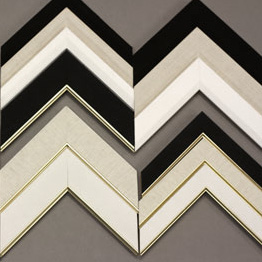 |
| Linen tape A type of cloth tape that is made from a linen top layer and a self-adhesive bottom layer. Available in archival-quality brands, it can be used for hinging (attaching the image to the backing or mat prior to framing) or for repairing damage to canvases or fine art papers. |
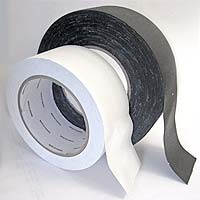 |
Liner A frame molding used within the outer molding/picture frame, sometimes called a "linen liner" or "insert". The may be covered with fabric, such as velvet or linen. Many liners are made from fully finished frame stock, including gold or silver. The liner serves the same purpose as a mat: to provide a distraction-free space between the art and the frame, and enhance the artwork.
Liners are paired with stretched and mounted canvas prints or paintings, and do not require a clear glass or acrylic cover. A liner may also be used on large, glass-covered artwork, as the largest mat size available is 32x40". If it is more than 2 1/2 inches wide, it is called a "panel". 
Order online: Linen Liners |
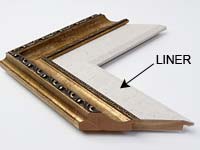 |
| Lip The inner edge of the picture frame, that is thinner than the rest of the frame. The lip conceals the rabbet and provides an extension that keeps the artwork from simply falling through the frame. Often, the lip of the picture frame is ornamented or painted a different color from the rest of the frame. |
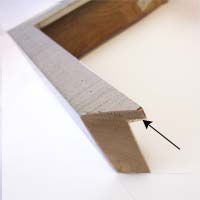 |
Lithograph A copy of a work that is created by the artist himself (ie: not a print created years later from a digital image).
The artist creates a mirror image of the artwork using grease pencils on stone. Oil-based ink is then applied to the piece, and bonds with the grease but avoids the uncolored areas. Canvas or paper is then laid over the plate and pressed to transfer the ink onto the material. The plate is then re-inked for the next sheet of material. |
M ^^Top
Mahogany A tree which grows in West Africa, South and Central America. The wood is quite hard and lightweight, and has a coppery-red to reddish-brown color. Mahogany wood is valued for its color, workability, and because it does not shrink or warp. |
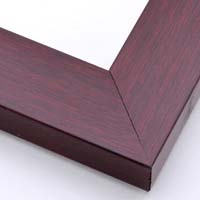 |
| Mail Order Goods or services that may be shipped by mail from the provider to the customer, after being ordered via a website, phone or mail-in form. |
Masking tape A pressure sensitive, self adhesive that is easy to tear and generally cream or white in color. It is available in various widths and is popular for protecting areas adjacent to those to be painted, due to its ease of removal. Various strengths are available, and are rated 1-100 based on the adhesion.
Order online: We offer various Tapes and Adhesives |
 |
Mat A mat serves two purposes within a picture frame: first, to prevent the image from touching the glass, and second, to frame the image and enhance its visual appeal.
Order online: Matboards |
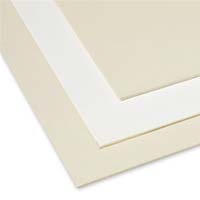 |
| Mat Color Refers to the hue or shade of the mat board which will be cut to border an artwork within a picture frame. Mats are available in almost any color, though shades of white and cream are most common. |
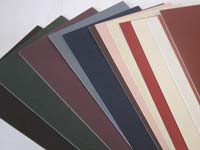 |
| Mat cutter The machine used to cut the opening in a mat. After the outer size is cut, the mat is placed right-side down on the cutter. Multiple guards are set to the dimensions of the opening and a sharp blade is pressed into the mat and slid from one guard to the other. This process is repeated on all four sides to create the mat opening. |
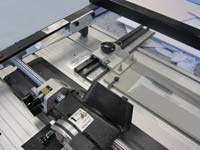 |
| Mat Offset Refers to the measurement subtracted from the artwork size (width and height) to allow for the mat to overlap the image. Generally, 1/4" is subtracted from each measurement, for an overlap of 1/8" on each side. |
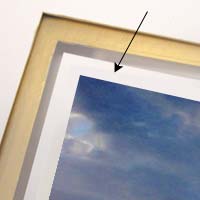 |
| Mat opening/mat Window The part of the mat that will be cut out the allow the image to show through. This measurement needs to be approximately 1/16" to 1/8" smaller on each dimension in order to keep the image from falling through, or the white space around the image from showing within the window. |
Mat(ting) A thin, flat, paper-based board (sometimes called a "mat board")used in picture framing to separate the artwork from the glass. A window is cut into the center of the mat board, usually in a rectangle that covers the piece 1/8" on each side, creating a border around the artwork. The mat border also serves as a distraction-free "breathing space" between image and frame.
Order online: Matboards |
|
Matte - Matt - Mat A border that can be selected to surround a framed artwork between the art and the frame. The mat\'s purpose is create space between the frame and the art, and highlight the artwork. There are countless colors of mats to choose from, and the best choice will draw out the image without distracting from it.
Mats come in a wide variety of makes and styles. Their thickness (identified by ply: 4-ply, 8-ply) affects how much of the white or black core will be visible in the bevelled edge around the image. They may be conservation-grade, which means they are acid-free and will not fade, yellow or cause negative chemical reactions with the artwork.
In addition, mats can be layered in a double- or triple-mat border. In this case, a "reveal" of the bottom mat or two lower mats - generally 1/4 inch - provides additional decoration to the artwork. This is ideal if the artist or collector would like to highlight multiple colors or shades within the art.
Browse our wide selection of matboards, guaranteed to add that perfect final touch to your photograph or artwork.
To order Custom Cut Frame MatBoards click here: Custom Cut Frame MatBoards |
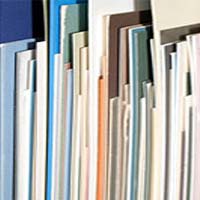 |
MDF Medium density fiberboard (more commonly known as MDF) is constructed from residual wood pulp fibers, which are pressed with great force to form a wood-like board that is known for its strength and density. MDF frames are often less expensive than real wood frames, because the materials used to create them are the recycled pieces of the real wood.
Though initially identifying the "medium" density, to differentiate it from firmer and softer densities, today MDF refers generally to any fiber board. |
| Mending tissues A transparent, thin paper with an adhesive, used to repair small tears in paper or canvas artwork. The papers are generally pressure-sensitive and acid-free, for archival repairs. |
Metal frames Picture frames generally constructed of aluminum pulled through a cross section die to create a long piece of uniform molding. The frame length is then etched if the design requries, and covered with a colored coating. The lengths are then sent to the framer to for cutting and frame construction.
Order online: Metal Frames |
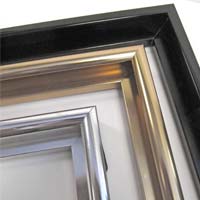 |
| Metal French Cleats A two-piece, heavy-duty hanger used for displaying large framed artwork on the wall. Each long metal piece has screw holes on one long edge and a raised lip along the other. One piece is screwed into the back of the picture frame, with the lip facing down. The other piece is screwed into the wall with the lip facing up. The frame lip will then sit within the wall lip, securely holding the artwork. Order online: Metal French Cleats |
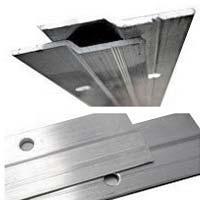 |
| Metric A system of measurement used in Canada, Great Britain and other non-American countries. Its units of measure include centimetres (0.4"), meters, celsius and km. |
Mica In regards to picture frames, Mica actually refers to a substitute for the mineral mica, which was developed to replace the real thing in the early 20th century.
Today this plastic laminate is used for flooring, countertops, and to coat mdf or wood picture frames. Mica is easy to wipe clean, heat resistant, and creates an attractive, glossy finish that many customers seek when buying a frame.
Alternately, a powdered mineral used to create tempered glass. Some artists use colored forms of the powder mixed with a glaze to paint glass. When heated, the mica fuses with the glass to create a permanent coloration. |
| Microfiber A synthetic fiber that is thinner than the threads usually used for woven fabrics. The result is an extremely soft, absorbent cloth suitable for cleaning scratch-sensitive surfaces. Unless otherwise noted, microfiber cloths are the best choice for cleaning picture frame glass or plexiglass. |
 |
Mirror Hangers Small plastic or metal hooks with a screw hole, which are attached to the wall. The mirror is inserted behind the lip of the hanger, and is held in place with one hanger on each end. Some mirror hangers have a decorative face, and they are generally clear or translucent.
Today, a great number of options exist for displaying wall mirrors securely and stylishly. |
Miter A joint created by cutting two pieces of material at 45 degree angles and affixing them together to create a 90 degree corner.
A miter is the most common type of corner used in picture framing. |
| Miter saw A saw with the blade angled at 45 degrees; used for cutting picture frame moldings that will be connected with a miter joint. |
| Mold/Mildew A growth that can develop on wood frames and paper left in moist areas for a long period of time. Mold and mildew can ruin artwork if not removed. Often, a mixture of bleach and water can kill off the growth and prevent it from returning. |
| Molding The lengths of picture framing material that will be cut and shaped into a custom-size picture frame. Moldings are made from a variety of materials, including wood, metal and Styrofoam. A picture frame molding sample will usually be a corner edge piece. |
| Molecular Trap Conservation picture framing products designed for archival images, consisting of a "micro-chamber" that traps and neutralizes air pollutants that can be harmful to an artwork by causing fading or deterioration. |
| Moore hangers Moore is a producer of various fastener products including picture hangers, push pins and framing hardware. They are located in the USA. |
 |
| Morso chopper A brand of miter chopper that cuts framing and stretcher bar moldings at a 45 degree angle in preparation for joining. These machines are generally self-standing and manually operated by a foot lever |
Mounting Mounting refers to the process of attaching or securing a print, artwork, photograph, or other two-dimensional object onto a backing board, mat, frame, or display surface for presentation, protection, or preservation. Mounting techniques vary depending on the size, weight, and characteristics of the object being mounted, as well as the desired display method and aesthetic preferences.
Common mounting methods include dry mounting (using adhesives or heat to bond the print to a backing board), hinge mounting (attaching the print to a mat or backing board using archival hinges), float mounting (suspending the print within a frame or display case), and pressure-sensitive mounting (using adhesive sheets or tapes to adhere the print to a substrate). Proper mounting ensures that prints are securely held in place, flat, and protected from damage or deterioration over time. |
| Mounting Strip Another name for the group of adhesives used for hinging artwork (attaching it to a backing or mat prior to framing). Mounting strips include rice paper, double-sided tape, and hinging tissue. |
Mulberry paper A specialty paper that is thin and stiff, made from the bark of the mulberry tree. It is used in various art processes including screen printing, calligraphy and clothing. It is stronger than wood pulp paper.
Cheaper brands may be made from rice straw. |
| Multi-Opening Mat Board Any mat into which multiple viewing windows are cut. This allows more than one picture to be showcased within a single frame. Multi-opening matted images were common in the 1980s for showing family photographs, and have begun to come back in style. |
Museum matboard Another term for conservation or archival-grade matboard. To qualify, matting must be acid-free in order to prevent damage to the artwork as time wears on. Our museum core matboard is made from 100% virgin cotton rag that is bleed and fade resistant and buffered with calcium carbonite.
Order online: Museum Core Matboard |
Museum Wrap While "gallery wrap" refers simply to the process of wrapping a canvas all the way around the stretcher bar frame and affixing it to the back, "Museum wrap" refers to the color on the drop edges (sides) of the canvas). In a museum wrap, the entire image is confined to the front of the canvas, and the sides are a solid color or white. This may be due to canvases in museums and galleries generally being frames, so the edges were never visible.
There appears to be some disagreement about whether museum wrap is limited to canvases wrapped on 1 1/2" in stretcher bars, or if the depth of the bar does not matter for the designation. |
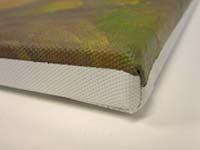 |
| Mylar A thin, transparent film made from polymers, also called "polyester film". Mylar picture corners are often used in conservation/archival picture framing because they cannot be easily seen, and do not require permanently affixing the artwork to a backing. |
N ^^Top
Nail hole fillers A thick, paste-like substance used to fill and conceal holes in a wall or panel caused by nails. Generally applied from from a tube or using a putty knife |
Nail-less hangers Any hanger or hook that does not require a nail to affix it to the frame or wall.
(1) sawtooth hangers generally have a pointed tip on each end that can be pressed or hammered into the top back of the frame. A nail or other hook is required to hang it on the wall, however.
(2) Adhesive hangers are popular today, and are comprised of a flat, double-sided adhesive that affixes the hanger to the wall. When the hanger needs to be removed, a tab attached to the adhesive is pulled, and the entire piece comes off without ruining the wall.
(3) A hanger with sharp teeth that can be pressed or hammered into the wall. The face is then flush with the wall, providing a jutting hook on which to hang the artwork. |
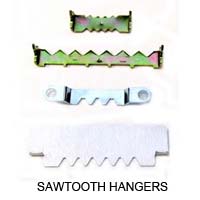 |
| Nails(Brads) Similar to "tabs" or "points", small, thin nails may be pressed into the remaining rabbet wall at the back of the picture frame to hold the contents within the frame. This type of fixture cannot be folded back to remove the artwork, and is therefore ideal for permanent framing projects. |
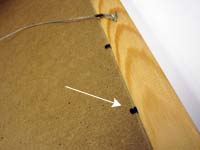 |
| Needle Art Refers to a wide variety of crafts that involve thread stitched into canvas with a needle, to produce a two dimensional, textured artwork. Includes cross stitch, needlepoint, embroidery and tapestry. |
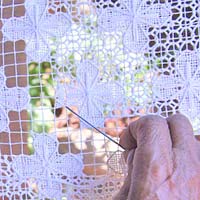 |
| Needlework Refers to a the process of stitching thread into canvas with a needle, to produce a two dimensional, textured artwork. Includes cross stitch, needlepoint, embroidery and tapestry. |
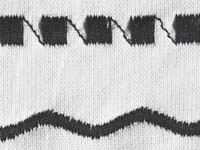 |
| Nielsen Moulding A US-based company that produces and distributes frame moulding, mat and foam board and ready-made framing products. |
 |
| Non-Glare Glass Glass where one or both surfaces have been treated chemically or mechanically to slightly roughen the surface, causing reflected incident light to be dispersed in all directions. Because the glass surface is not smooth, art images behind the glass tend to be softened. The softness depends on how far the art is from the glass. No more than two or three mats are recommended to be used with non-glare glass. If clarity is desired, objects in deep frames (shadow boxes) should not be displayed with non-glare glass. |
Non-Glare Plexiglass Acrylic where one or both surfaces have been treated chemically or mechanically to slightly roughen the surface, causing reflected incident light to be dispersed in all directions, minimizing glare. Because the glass surface is not smooth, art images behind the glass tend to be softened. The softness depends on how far the art is from the glass. No more than two or three mats are recommended to be used with non-glare glass. If clarity is desired, objects in deep frames (shadow boxes) should not be displayed with non-glare glass.
Order online: Plexiglass Mounting Board or with any Picture Frame order |
| Non-Invasive Mounting Any method of affixing an artwork to a mount that can be reversed without damaging or altering the artwork. This includes using some water-soluble hinging tissues, certain tapes and natural starches, and fasteners like adhesive corner pockets. |
Numbered Ducks A type of cotton canvas that subscribes to a numbering system that identifies the weight of the cloth. Numbered duck has a weight of less than 19 ounces per 36x22" piece. Duck canvas with a higher weight is called naught duck.
Order online: #10 and #12 Canvas |
O ^^Top
Oak Oak is classified as a dense hardwood, though both desciduous and evergreen varieties exist. Extremely hard and durable, oak has long been used in building ships, buildings and barrels. The coarse grain is considered quite attractive, and absorbs stains and other finishes easily. The wood is resistant to decay, which is a good quality in archival picture framing. |
OBA Optical brightening agents.
A class of chemicals that absorb light energy in one spectrum and emit it in another. When applied to white paper, an OBA can lessen a yellowed appearance. Also called "fluorescent lightening agents", it is applied to some fine art papers to create the bright white often desired. Whether or not OBAs have an archival lifespan is still contested. |
Obeche An African tropical tree, Obeche is a soft hardwood that is commonly used in making guitars, but has become quite popular for picture frame mouldings.
Slightly yellow in color, Obeche has an interlocking, medium-coarse grain and is quite easy to carve and stain. Considering it is generally imported (as plywood or veneer most commonly), it is a relatively inexpensive wood. |
| Off Square The cut of a mat board, artwork or picture frame that results in a parallelogram shape - that is, the vertical and horizontal lines are parallel, but the corners are not square. |
| Offset Applies to displays using multiple mat boards. The offset is the amount of the bottom mat that is showing outside the top mat. 1/4" is the most common offset amount. This means 1/4" of the bottom mat will show on each of the four sides. |
Offset Clips Used to affix a stretched canvas to a frame. Also known as a “Z bracket”, this stepped metal hardware has a hole in either end through which a screw or nail is driven. One end of the bracket is fastened to the stretcher bar frame, the other to the back of the picture frame. Offset clips allow for artwork that is slightly larger or smaller than the depth of the frame rabbet to be fitted. They are also used to attach a canvas to a floater frame.
Order online: Offset Clips |
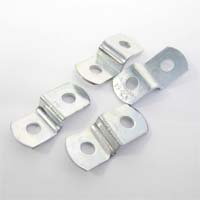 |
| Offset Corners A mat corner style that features a square section of the inner edge left in place, while the rest of the viewing area is cut out. The result is a decorative mat border. |
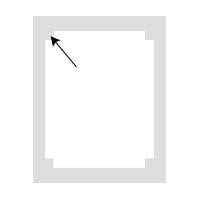 |
| Offset Lithography Also called "offset printing". A printing method that transfers images on metal plates to inked rubber rollers. The rollers then apply the image to the paper as it passes between them. |
| Ogee A common eastern surface moulding and Victorian roof design, the ogee is a decorative shape in art that resembles an onion. It is created by two arches that begin curving in opposite directions at the end, so the peak is made by two close-set, parallel lines. Today, repeated ogee patterns are common on fabric. |
 |
| Oil-primed canvas Due to their different properties, canvases used for acrylic and oil painting cannot be primed with the same medium. Canvases prepared for oil painting traditionally use a solvent-based primer, though acrylic primers work for oil painting as well. The primer prevents the paint from soaking into the canvas. |
| Omni Hanger A brand name piece of hardware used to hang metal picture frames. Similar to a euro hanger, one piece is attached to each vertical arm of the frame by sliding it into the back recess and tightening the screw. Wire or string is then threaded between the hangers with some slack, allowing the frame to be hung on the wall. |
| Onyx matboard A brand of mat that produces high-quality, archival matboards for picture framing. |
| Open Edition Print Any series of fine art print for which a limited number of copies was not specified; thousands of copies may be produced. This diminishes the worth of the piece, but also the original cost. |
Optical Brightening Agent (OBA) A class of chemicals that absorb light energy in one spectrum and emit it in another. When applied to white paper, an OBA can lessen a yellowed appearance.
Also called "fluorescent lightening agents", it is applied to some fine art papers to create the bright white often desired. Whether or not OBAs have an archival lifespan is still contested. |
| Ornament Another term for "decoration" or "design". Generally refers to some degree of adornment, as opposed to a flat, blank surface. |
 |
| Ornate Ornament Any highly decorative design on a picture frame face. Usually refers to raised adornments (relief). |
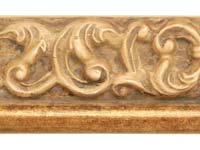 |
| Ornate Style A picture frame style recognizable by its highly decorative face. Ornate picture frames usually feature a raised (relief) design and often are painted in gold or another high-shine finish. |
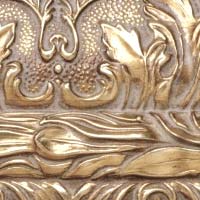 |
| Outer mat If a framed artwork has a double mat (a top mat, usually 2" wide, and a bottom mat with a reveal of approximately 1/2"), "outer mat" refers to the top mat, of which a greater amount is seen. |
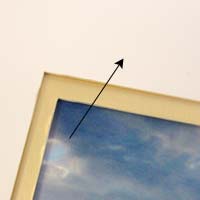 |
| Outgassing The release of gases that occurs in some materials. This process can cause fogging on the inside of an artwork's glass cover if the artwork was not left out to fully dry before being framed. The length of time required differs depending on the machine and the paper used. |
Outside/Outer frame size This measurement refers to the total size of the picture frame, from one outer edge of the frame to the other. In picture framing, this measurement is rarely used, unless the amount of space the frame will take on the wall is an important consideration.
For example: if the frame is bordering an 11x14" print, and the frame width is 2", the outside size of the frame is 15x18" (11"+left frame+right frame; 14"+top frame+bottom frame). |
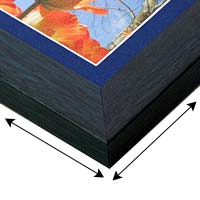 |
| Oval frames Any picture frame constructed in a elongated circular shape. An oval frame or image requires height and width measurements much like a rectangular frame, as opposed to the single diameter measurement of a round frame. |
| Oval mats Any mat with an elongated circular opening. The frame holding the mat may be oval as well (requiring the outer mat edge to be oval), or rectangular (requiring the outer mat edge to be rectangular). |
| Overlap Similar to "offset", this refers to the amount of the artwork a picture frame lip or mat will cover on each side of the piece. An overlap is necessary to keep the contents behind from falling through the opening. |
| Oxidation A chemical process that results in an artwork fading over time. Light (both UV and non-UV) makes paint and ink particles more susceptible to an oxidizing agent (air). UV-protective glass or acrylic and acid-free paper can help delay this process for as long as 100 years. |
P ^^Top
Pantone Color Guide The exhaustive list of all the colors in the Pantone Matching System (PMS). Pantone applies a numerical code to all the colors and shades in its glossary, more than 2,000 distinct colors. |
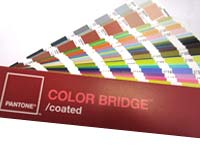 |
Paper weights The weight of a piece of paper is defined by the weight in grams per square meter (gsm). Alternately, weight may be determined by what a set number of sheets would weigh in pounds. Regular bond paper that one might use in a desktop printer is generally 90 gsm or 20-24 lb.
A general breakdown of paper weights by gsm:
35-55 gsm: newspaper
130-170 gsm: posters
350 gsm: business cards |
| Papyrus A thin paper made from the papyrus plant, originally used in ancient Egypt due to the abundance of the plant there. Due to its extreme fragility, great care must be taken in framing artwork on papyrus. Some artists and calligraphers still use it today. |
 |
| Paste An adhesive used in picture framing to affix the artwork to the backing or mat prior to fitting. Acid-free options are available for working with archival art. |
Pastel Paper Since pastel paintings rarely cover the entire surface on which they are painted, paper selection is important. Pastel papers come in a variety of colors, textures and sizes.
The color of the paper will affect the final temperature of the art, lending a richer or starker tone to the image. Texture options range from extremely smooth to as coarse as sandpaper. |
Pdf (Portable Document Format) A file type that presents the document in a certain format, regardless of the applications available on the receiver's computer. For instance, if a document written on Microsoft Word is saved as .pdf, when opened on another computer it will look just like it did on Word, even if that computer does not have Word.
Pdf documents are opened in a pdf reader, like Adobe Reader or Adobe Acrobat, and can only be edited once saved unless specifications are made that allow changes.
A document is rarely constructed in pdf format. Rather, it is saved in that format after it is completed.
pdf is a text file format, which means digital images should not be saved in this format, unless they are intended to accompany the text. |
| Peach A color that is somewhat paler than its namesake fruit. It presents as an orange-yellow, often with a pinkish undertone. It is generally considered a pastel shade. |
 |
Pecan Pecan tree wood is very hard and not easily worked with. It is a member of the hickory family, and when sold, is generally combined with other hickory woods and sold as "hickory".
In picture framing, pecan is most used to refer to the color - similar to that of the nut itself: a rich, golden brown. |
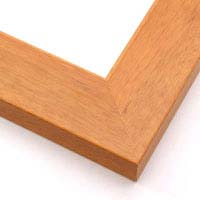 |
Pegboard A thin board with holes drilled at regular intervals across the entire surface. Usually used to hang items by affixing it to the wall and inserting metal pegs or hooks into the holes.
Most often a sheet of MDF or tempered hardwood, but metal and plastic versions are also available. |
Peterboro Matboards Peterboro is a company who manufactures and distributes a variety of picture framing mat boards. They are located in Ontario, Canada.
Order online:Matboards |
 |
| Pewter Color A hue imitative of the metal alloy Pewter. Generally a dull silver finish with a dark antique finish and bluish undertone. |
 |
p ^^Top
pH A measure of the acidity or basicity of a solution. A product with a pH of less than 7 is considered acidic, while a product with a pH of greater than 7 is basic or alkaline. Products with a pH of 7 are considered neutral. In picture framing, a pH other than 7 can diminish the longevity of the artwork. Framing products such as the mat, paper and backing are coated so as to be pH neutral. |
P ^^Top
Phillips Screwdriver The tool used to tighten and loosen screws with a cross or X (phillips) slot. The phillips slot and screwdriver have slightly curved inner corners where the cross lines meet. The frearson screw and screwdriver have an X or cruciform shape as well, but straight, 90 degree corners. |
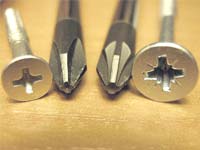 |
| Photo Activity Test (PAT) A standardized testing method that determines the interactions between a photographic print and the materials used to contain it in framing (inks, adhesives, glass, photo albums, etc). Companies can submit their materials to be tested. |
| Photo engraving Photoengraving is a process that uses a light-sensitive photoresist applied to the surface to be engraved to create a mask that shields some areas during a subsequent operation which etches, dissolves, or otherwise removes some or all of the material from the unshielded areas. Normally applied to metal, it can also be used on glass, plastic and other materials. |
| Photoshop Digital image (raster graphics) editing software developed by Adobe. Simply defined, Photoshop allows the user to alter photographs and other digital images by applying layers of filters. Objects can be removed from the image, colors and tones can be changed, and effects can be applied to make the image look, for instance, like a watercolor painting or pencil sketch. |
| Picture Framing Software Picture framing software to manage and sell frames: Artisan Frame Plus, Artteck, Custom Framer, EstLite, ezFramer, FerenSoft Trio!, FrameMan, FrameReady, Framesmart, Framiac FramR, Fullcalc, Gallery Express, GalleryPro, I-Framer, IF Retail, LifeSaver, MarkO, Masterpiece Manager, PCS Framer POS, Adit PFP, QuickPrice, Royall Framing, Specialtysoft, Spinnsoft Gallery, Wessex |
| Pine wood Pine is recognizable by its light, yellowish color. It is a softwood with an even, straight grain, that is easily worked both by hand and by machine. Due to its resinous nature, it may resist paint application, and has a distinct scent during manufacture. Most subspecies of Pine are affordable and popular in picture framing and other woodworking projects. |
Pinner guns A manual tool used in fitting images to picture frames. The gun is very similar to a heavy duty stapler, but the pin (also called points or tabs) is ejected outward from the vertical end, rather than downward from the base.
The pinner gun is placed flush against the backing of the framed image, with the vertical edge pressed against the exposed rabbet of the picture frame. When the trigger is squeezed, a small metal tab is driven partway into the wood, holding the contents of the frame in place.
Also called a point driver, the pins may be flexible, and folded back to change the frame contents, or rigid for more permanent framing projects. |
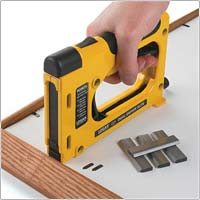 |
| Pixelation All digital images are made up of pixels, and when an image is blown up (increased) too large, these individual pixels can be seen as small square, creating a grainy visual texture. If pixelation occurs, the printed image will appear low quality and details will be lost. The size at which the pixels begin to be visible depends on the original size of the image. |
 |
Plastic Tabs A rigid plastic piece that has a pressure-sensitive adhesive on one half of one side, and a hole at the top of the non-adhesive half. The adhesive is pressed onto the back of the picture frame, plexi mount or foam core backing. The hole can then be hung on a nail, tack or pushpin in the wall.
Plastic tab hangers are intended for small, lightweight artwork. |
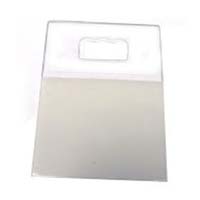 |
| Plate Impression In printmaking, an image is etched or carved onto a flat piece of wood or metal. Ink is then applied to the design, and it is pressed onto paper or canvas. Each copy made is one plate impression. |
Platen Press Cleaner A solution used to remove left over adhesive from the surface of a platen press.
Platens are flat metal (originally wood) plates that are pressed with great force against paper to create an impression. They were originally used in letterpress printing, and today are used to cut, crease or number digital or other prints. |
Plexiglass A widely accepted term for the acrylic glass often used in as the clear cover or “glazing” in framing (derived from the brand name Plexiglas). Acrylic glass is lighter than real (silicate) glass and allows for a clearer, untinted view of the artwork behind it. It does not shatter and can be treated to be archival and UV-resistant.
When you order your framed print, you can choose the best plexiglass for the display. |
Pliers In picture framing, a special type of pliers may be used to press points or brads into the back of picture frames to hold the contents in place.
In canvas stretching, another type of pliers is used to ensure the canvas is stretched as tightly as possible around the stretcher bar frame.
Order online: Canvas Pliers |
Ply Plies are the layers pressed together to create a piece of paper. The more plies, the thicker the paper (think 2-ply facial tissue). In picture framing, ply applies primarily to mat boards.
Mat boards are available in 2-ply, 4-ply, 6-ply and 8-ply. With each larger number, the mat board is thicker, which means the white bevel (if the mat's core is white) on the inner edge will be deeper. |
| PMMA PMMA or acrylic is a widely used transparent plastic material known for its applications in various markets from picture framing, car windows, smartphone screens to aquariums. It is a tough plastic, easy to shape and a great alternative to the high cost and less resilient glass. |
| Pneumatic hand tools A tool held in the hand and used manually, with the assistance of air power. The tool is generally hooked up to a tube that is affixed to an air compressor. |
Point driver A manual tool used in fitting images to picture frames. The gun is very similar to a heavy duty stapler, but the points (also called pins or tabs) are ejected outward from the vertical end, rather than downward from the base.
The point driver is placed flush against the backing of the framed image, with the vertical edge pressed against the exposed rabbet of the picture frame. When the trigger is squeezed, a small metal tab is driven partway into the wood, holding the contents of the frame in place.
Also called a pinner gun, the points may be flexible, and folded back to change the frame contents, or rigid for more permanent framing projects. |
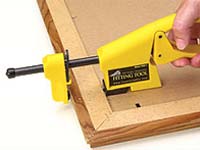 |
Point Squeezer A hand held, manual tool similar to pliers, used to force points or tabs into the exposed rabbet of a picture frame, holding the frame contents in place.
Unlike a point driver or pinner gun, there is no trigger that lends extra force to insert the point. Instead, the handles are squeezed together to press the sharp-tipped point into the wood. |
| Points Also called "tabs". The metal tabs used to hold the contents of a frame in place. They may be hammered into the wood, or forced in using a point gun. |
Polstyrene Styrofoam is the brand name for a synthetic polymer compound called polystyrene. Frames made from this "foamed" plastic (which is much denser and stronger than the white material used for coffee cups and packaging) are less expensive than wood frames, and generally lighter.
Once shaped, they can be coated in a laminate to look exactly like wood, and relief designs and ornamentation can be added to the foam prior to coating. Styrofoam frames are a bit weaker than wood frames, because the joints must be glued together rather than nailed. |
 |
| Polyester Resin A type of viscous polymer that is often used in casting (poured into molds). Polyester Resin differs from epoxy resin in that it has less strength, is less adhesive, and tends to shrink. For these reasons, it is not often used as a coating, as epoxy resin is. |
| Polypropylene (PP) A type of plastic polymer often used in packaging materials. In picture framing, polypropylene adhesive corners may be used to affix images to a backing, or clear bags/sheets of the material may protect artwork. |
| Polystyrene Sheeting A type of acrylic glass used in picture framing. It is available with UV-protection, and scratch-resistant and non-glare coating. |
| Polyvinyl Adhesive Also called PVA, a rubber-textured polymer found in wood glue, white glue, carpenter glue and other adhesives. |
Poplar wood Poplar resides in the same family Aspen and Cottonwood, and is classified as a soft hardwood. In fact one of the softest hardwoods, it can cause problems when working by leaving a fuzzy texture behind on the edges after sanding or other light working.
Poplar has a light cream or yellow color, and a relatively uniform grain. It is generally quite inexpensive. |
Portrait Orientation Refers to the angle at which the framed or canvas image is hung. Portrait oriented images are those displayed so that the top edge (parallel to the floor) is the short dimension of the painting, and the side edge is the long dimension.
Also referred to as "vertical orientation".
The opposite of "landscape orientation". |
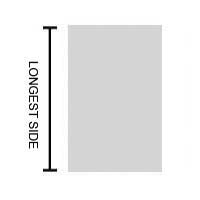 |
| Preservation Framing Preservation or conservation picture framing results in an archival quality display, and ensures that whatever processes are done to the art can be reversed without damaging the original piece. It requires the use of acid-free materials (paper, backing, adhesives) and UV-protective glass or plexiglass. |
| Pressure-Sensitive Mounting The act of affixing an artwork to another surface (foam core, gatorboard, dibond, wood panelling, canvas, etc) with an adhesive that does not require heat or a chemical additive to adhere to the artwork's surface. The materials will stick together using the force of the hand, or a press designed to apply a great amount of pressure. |
Pressure-Sensitive Tape A type of adhesive that does not require heat or a chemical additive in order to adhere to a surface. Pressure-sensitive tapes generally require only the force of the hand to make them stick, and have varying amounts of strength, depending on their intended use.
Masking tape, duct tape and cloth tape are examples of pressure-sensitive tape.
Order online:
Cloth Tape
ATG and Kraft Tape |
| Primary Colors A set of colors that, when combined, present as different colors. Red, green and blue are additive primary colors. When overlapped in different ratios, new colors are created. Yellow, cyan and magenta are subtractive primary colors used in mixing pigments or dyes. |
 |
Primed canvas A blank painter's canvas coated with a lead paint that reduces the absorbency of the canvas and improves the application the artist's paint. Canvas may be single or double-primed, as well as coated for a specific use, such as acrylic or oil paints.
KeenART Media offers double-primed and unprimed blank artist canvases for sale.
Order online: Artist Canvas |
| Priming The process of coating a canvas or paper with a clear or white medium that prepares the surface for the paint application. Canvases can be unprimed, single- or double-primed, and different primers are used for canvases intended for oil, acrylic or watercolor paints. |
| Profile The profile refers to the cross section of a picture frame molding, which shows the height, face width and shape (bevelled, scoop, etc), rabbet and lip. |
|
| Proof A part, miniature or full copy of a printed image, produced in order for the printer or artist to see how the final product will look. |
| Proof Sheet A small section of a digital image printed on canvas in order to determine the color saturation and texture of the inks on that particular surface. Often, multiple proofs will be printed on different surfaces with various color levels, in order to compare the results. |
| Purified Wood Pulp Also called "alpha cellulose". The material out of which mat board is generally made. "Purified" implies the product is lignin-free and of a neutral pH, and therefore suitable for conservation or archival framing. |
| Putty In picture framing, putty may be used to fill and disguise any gaps in the corners of the frame, or for concealing unwanted holes. |
Q ^^Top
Quill A writing tool that was used from the 6th to 19th century. The stem of a feather (most often Goose) was cut into a diagonal point and dipped in ink, which was held in the hollow tube. The sharp tip was then used to transfer the ink to the paper.
Today, quills are used in calligraphy and other art methods. |
 |
| Quire Twenty-Five sheets of any paper, one twentieth of a ream. |
R ^^Top
Rabbet (pronounced “rabbit”) The inner lip of a frame in which the picture framing materials, including the glass, mats, artwork, and backing, are held. Selecting a frame with an appropriate rabbet is an important part of the work of a professional framer. |
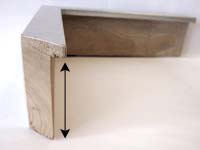 |
| Rabbet Depth The measurement of the space behind the inner lip of the picture frame, between the lip and the back of the frame. This is the amount of space available for the frame contents. Multiple mats and thick backing may require a deeper rabbet. |
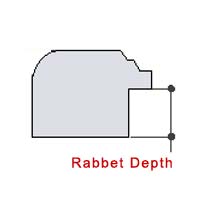 |
| Rag board A cotton material used to make mat boards. While rag board mats are not universally acid-free, our Museum Core mats made from rag board are guaranteed conservation quality. |
| Ramin Ornament Ramin is a light, straw-colored hardwood used in picture framing. Some non-ramin frames are treated to imitate ramin's soft grain and color. |
Ramin wood Ramin is a soft hardwood with a faint, straight grain. Generally, ramin is yellowish or almost white in color, sometimes with a gray tint. Though it is relatively easy to work with, this wood does have a tendency to splinter.
Because of its lack of detail, it is a popular wood for picture framing. However, over-distribution has made less available. |
 |
| Razor blade In picture framing, razor blades are used for a variety of purposes. They can be used to cut mats if a mat cutter is not available, or trim excess off prints and canvases. |
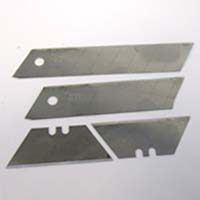 |
Ready-made frame A frame ready for purchase as is, as opposed to a custom-made frame. Ready-made frames are usually produced in standard sizes, e.g., 8x10, 11x14, 16x20.
Order online:
FrameLight
Metal Exhibition Frames
Jersey Shadowbox Frames |
| Reef knots A reef knot, also called a square knot, is a type of knot commonly used to secure wire or string to the hooks at the back of a picture frame. |
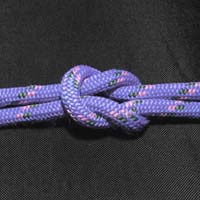 |
Reflection control glass A copyrighted term for a specific brand of non-glare picture cover glass. One side of the glass is etched (scratched) to create an uneven surface off which light is scattered, providing a matte, glare-free view of the image underneath.
Order online: Plexiglass Mounting Boards |
Regular mat A simple mat display within a frame, generally consisting of only one mat layer with an equal border all around and a square or rectangular viewing window. The most common regular matting color is white or an off-white shade.
Order online: Matboards |
| Release boards Thin boards, generally cardboard, covered on both sides with a silicone coating, between which the artwork is sandwiched prior to being placed on a heat press or laminator. The boards protect the artwork from any imperfections in the press plates, forces it to lie flat, and protects the press from any adhesive transfer. The silicone coating keeps the finished artwork and its coating from sticking to the board, and keeps the board from sticking to the press. |
| Release Paper Laid between an adhesive and a hard surface in order to protect the hard surface from the adhesive. Once heat is applied, the release paper or film allows the adhesive product to be removed from the hard surface without residue. |
| Remarque A notch or series of notches cut from the inner edge of a mat. This shows additional details in the artwork that lie outside the rectangular space in which most of the image is contained, without requiring a larger rectangular viewing area to encompass the details. |
Resin Coating A viscous, liquid epoxy resin is poured over the mounted paper print or reinforced stretched canvas to produce a smooth, clear surface. Once cured, the hardened resin creates a high-shine, glass-like coating that enhances color and dimension to the artwork.
Order your resin coated fine art print today.
Order Online: Epoxy Resin Ex-74 |
| Restoration Cosmetic repair of an object to recreate its original appearance. |
| Reveal The visible part of a secondary mat that extends beyond the inner edge of the top/primary mat. In a double mat this is the bottom mat. In a triple mat, this refers to the middle and bottom mats. |
| Reverse Molding Also called "reverse profile". Refers to a picture frame face style in which the highest part of the frame is at the inner lip, and the face slopes or scoops away toward the outside edge. Reverse moldings can add dimension and interest to the artwork, but also risk drawing the eye away from the central image. |
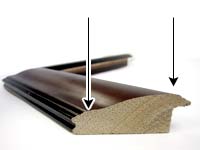 |
| Reverse profile Also called "reverse molding". Refers to a picture frame face style in which the highest part of the frame is at the inner lip, and the face slopes or scoops away toward the outside edge. Reverse moldings can add dimension and interest to the artwork, but also risk drawing the eye away from the central image. |
| Reversible A required quality of any framing or display process carried out on conservation or archival artwork. Whatever is done to the piece must be fully reversible without any negative impact on the original piece in order for it to maintain its archival status. |
| RGB A color mode or system representing the primary colors that are combined to display all the colors seen on a traditional computer monitor. It stands for Red, Green, Blue. |
| Rice paper Used in picture framing as a hinge when attaching artwork to a mat or backing, prior to framing. Generally, rice paper is acid-free and conservation quality, which means it will not degrade or damage the artwork over time. |
Rigid Backing Foam core (also called foam board) and Gatorboard can be used as backings in picture framing, to keep the artwork safe from dust and damage. Alternately, paper prints can be dry mounted onto foam core, Gatorboard or dibond (aluminum sheeting) for a frameless, laminated display.
Occasionally, prints are mounted onto wood boards to provide additional support for resin coatings or plexi face mounting.
Order Online: Rigid Backing Boards |
Riser (1) The depth of a stretcher bar - the distance between the back and the front of the bar that translates to how far the canvas will protrude from the wall, once mounted. 1 1/2" and 3/4" are the most common riser depths.
(2) A picture frame riser is a wall-affixed hanger which extends out from the wall, pushing the frame forward. Used to achieve varying depths on a display wall.
(3) May also refer to the panel inserted behind an image in a frame, which moves the image forward to create a shadow and space between the backing and the image. This process is called Float Mounting. |
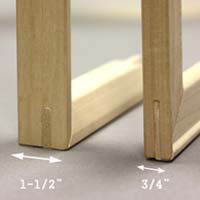 |
| Rising museum board Rising Museum Mounting Board is the first choice of framers, museums and conservators for the mounting, matting and preservation of fine prints and precious documents. Rising Museum Boards consist of 14 colors and manufactured with 100% cotton. The boards are acid-free, Neutral pH and buffered with calcium carbonate. Rising boards are sized for French matting and many artists use the boards for various fine art techniques such as drawing, charcoal, pastel, silkscreen and letterpress. |
| Robertson Screwdriver The tool used to tighten and loosen screws that have a square (Robertson) hole. |
| Rope frames A popular rustic frame style recognizable by a rope texture around the lip or outer edge of the picture frame face. This decoration is usually created by the addition of carved wood or clay on the original flat surface, creating a relief design. |
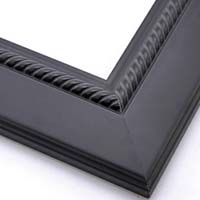 |
Round-top bumpers An adhesive or pushpin-style rubber guard that is affixed to each bottom corner of the finished canvas or framed artwork to keep the corners from scratching the wall when hung. They are a half-sphere shape
Order online: Bumpers |
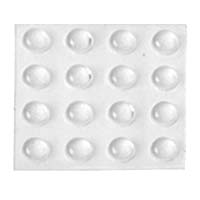 |
| Rounded frames Any square or rectangular picture frame with corners that are not square. A rounded picture frame will still maintain the straight lines between the corners (not yet oval or round). |
Rounded Top Metal Frames Any aluminum picture frame moulding style that features a rounded face instead of a flat face. This curve will continue around the face onto the drop edge of the frame, as well.
We have a wide selection of round top metal frames available. |
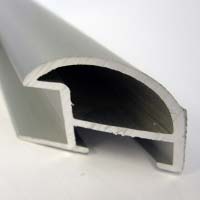 |
| Rub-N-Buff A brand name coating made from carnauba wax and pigment that can be easily applied to a surface with a cloth, and buffed into a tinted shine. It can be used to restore antiques or to alter the appearance of a picture frame. |
Rubber pads Also called bumpers or bumps, these half sphere, self-adhesive pads are placed in the bottom corners of a picture frame or canvas print to keep it from scratching or scuffing the wall when hung. Foam bumpers are also available.
Order online: Bumpers |
| Rustic wood Any picture frame featuring a distressed, natural wood frame face. Generally, the wood texture will be preserved or recreated - not sanded smooth - for added dimensions. These frames are best suited to rural or nature artwork. |
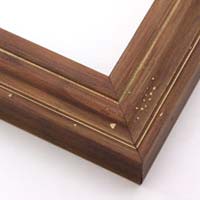 |
S ^^Top
Sampler A sampler is a small piece of needle or yarn work the displays a certain stitch or pattern, usually in suggestion or preparation for a larger project. |
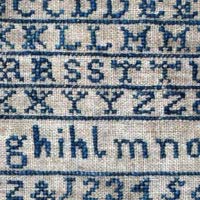 |
| Sandpaper A piece of heavy paper with one surface coated in an abrasive material. It is used to smooth rough surfaces by removing the raised particles, in preparation for painting. Alternately, it can be used to "rough up" smooth surfaces for better traction. |
 |
| Sandwich A term for the bundle or contents of a picture frame, when stacked together. This includes the clear glass or plexiglass cover, mats (if applicable), artwork and backing. |
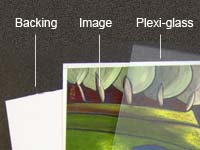 |
| Saw A hand held or self-standing tool with a circular, serrated blade that cuts through hard materials such as wood and metal by spinning at high speeds. |
 |
| Sawblade Lubricant A wax stick or applicant that is applied to a saw blade to keep it moving smoothly and uniformly, and prevent chips of the cut material from blocking the spin of the blade. |
Sawtooth Refers to various items with a serrated, sharp "toothed" edge, including sawblades, certain knives, and hanging hardware.
Order online: Sawtooth Picture Hangers |
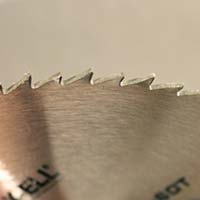 |
Scanning Scanning is the process of converting physical documents, photographs, or images into digital format using a scanner or scanning device. During scanning, the scanner captures the optical characteristics of the original document or image and converts them into digital data, typically in the form of a raster image file (e.g., JPEG, TIFF, PNG). Scanning is commonly used for digitizing printed documents, photographs, artwork, and other visual materials for storage, distribution, manipulation, and display in electronic formats.
Order your high quality artwork scan with our easy, online order system. |
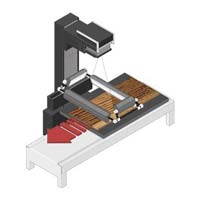 |
| Scoop A picture frame face design that has a concave curve. Generally the outer edge is higher than the inner edge, drawing the eye toward the image. |
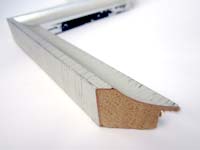 |
Score To make an indent or line in a surface by cutting or scratching with a blade.
Mats are often scored near the inner edge to create depth and the appearance of a double mat. Designs can also be scored around the face of the mat. |
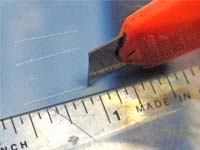 |
| Screen Printing Screen printing is a printing technique whereby a mesh is used to transfer ink onto a substrate, except in areas made impermeable to the ink by a blocking stencil. A blade or squeegee is moved across the screen to fill the open mesh apertures with ink, and a reverse stroke then causes the screen to touch the substrate momentarily along a line of contact. This causes the ink to wet the substrate and be pulled out of the mesh apertures as the screen springs back after the blade has passed. |
| Screw eyes Also called "screw rings". A type of metal hanging hardware with a threaded screw base and a looped top into which wire, string or a hanger can be inserted. |
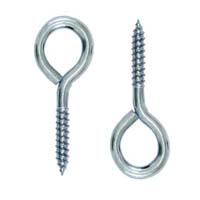 |
| Screw rings Also called "screw eyes". A type of metal hanging hardware with a threaded screw base and a looped top into which wire, string or a hanger can be inserted. |
Security hangers A type of picture frame hanging hardware that makes the displayed image very difficult to remove (and therefore, to steal).
The frame attachment is locked into the wall attachment and mounted to the wall as one piece, so that it is not possible to simply lift the frame off the hanger.
Commonly used in hotels, galleries, hospitals and any public place where expensive or significant art is not otherwise guarded. |
| SEG SEG, stands for Silicone Edge Graphics. It is a printed fabric signage with a thin silicone beading sewn around the edges that fits into edgeless Aluminum framing. The silicone beading fits into a recessed groove around the perimeter of the frame to stretch the fabric completely smooth. The result is an upscale modern frameless appearance. |
| Self-adhesive tape Also called "pressure sensitive tape". Any adhesive tape that sticks to a surface using only the application of pressure. It does not require added water, heat or solvent to adhere to the surface. |
| Self-leveling A variety of viscous products that will spread until the surface is even, without any need for manual smoothing. For example: resin coating. |
Sello tape A British brand name adhesive that has become the generic term for its type.
Sellotape is a translucent, light-duty tape that is a cellulose-based, pressure-sensitive tape used in attaching, sealing and repairing materials. |
 |
| Shade A shade is a color mixed with black to create a darker version of the color. In contrast, a tint is a color created when a solid color is mixed with white, creating a lighter version of the color. |
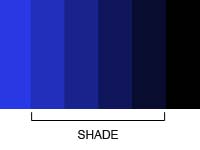 |
Shadow Box A picture frame with a deep rabbet, designed for the display of three dimensional objects. Shadow box frames are available in a variety of depths from 7/8” to 2 1/4”, and should be selected based on the size of object being framed. Shadow boxes are often used to showcase sports and travel memorabilia.
Order online: Custom-Made Shadow Boxes
Jersey Shadow Box Frames
|
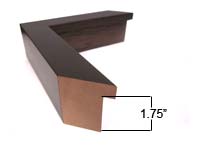 |
| Shellac A liquid coating derived from the excretion of a beetle found in India and Thailand. When the dried flakes are mixed with ethanol, they become a natural primer that dries solid and serves as a protective insulator, sealant or stain. Today, real shellac has been largely replaced by chemically-produced lacquer. |
| Shingle A shingle is a tapered piece of wood used to cover building rooves and walls to protect them from the elements. In picture framing, an overlapping shingle design may be used on the face of the frame to create a textured, layered look. |
 |
Shrink film Also called shrink wrap, is a plastic film used to tightly wrap objects together. It usually sticks to itself, therefore negating the need for an additional adhesive to hold it in place.
Once the object(s) is wrapped in the shrink film, it is placed on a heated surface or in a heated compartment. The film will decrease in size, tightly encasing the contents in clear packaging. |
Silicone Paper A type of paper that is treated with a silicone coating which prevents it from sticking to whatever it is laid against. Often used to separate artworks from one another, or placed over an artwork prior to rolling, so it does not stick to itself.
Similar to Release Paper. |
| Silkscreen mats A mat board with an added silkscreen design to further incorporate the mat into the artwork. Often seen in framed pieces where the mat takes up a large amount of the frame opening. |
| Single Fill A type of cotton canvas or cotton "duck" that is identified by its approximate weight per square yard, in ounces. Unlike numbered duck, which is woven with two strands of yarn in the horizontal "weft", single fill is woven with only one strand. |
| Single Mat Similar to a regular mat; a framed display with only one color of mat board serving as the border around the image. Unlike a regular mat, the single mat could be decorated, or have stylized corners or etching. |
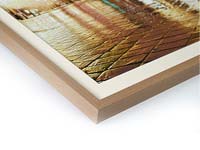 |
| Sintra Sintra is lightweight PVC board. Sintra has a uniform, fine, closed-cell structure that provides a low gloss satin finished surface. They are highly rigid and impact resistant. Durable for interior and exterior applications with a very high aversion to corrosion & water absorption. They are self-extinguishing and flame resistant. Available in black or white, 3mm(1/8") & 6mm(1/4") thicknesses. |
| Slatwall A wall for displaying objects or artworks that does not require holes or nails. The wall is composed of horizontal wood or fiberboard strips with deep spaces between them into which hooks and hangers can be placed to hold items for sale or display. Commonly seen in retail stores and galleries. |
| Slip frame A piece of thin moulding, similar to a linen liner, that adds extra decoration to a framed image. The slip (also called a fillet) can be inserted beneath the frame lip, between the frame and the image, or between the inner edge of the mat and the image. |
| Slip mats A mat remnant used when cutting a mat opening that helps achieve a clean, smooth bevelled edge. The slip sheet is placed against the front of the mat, so it is between the mat and the cutter (the mat is placed back side up). It provides support to the top layer of the mat so that the blade of the cutter does not tear that layer when cutting through. |
| Slip Sheet A very thin, translucent piece of paper or tissue, used to separate artworks to keep them from transferring inks or sticking to one another. pH neutral versions are available for archival prints and original artworks. |
| Snap pictures Snap Frames, also known as click frames or snap-open frames, are aluminum frames for posters equipped with spring-loaded sides. These springs allow the snap frame's sides to be easily opened and closed. |
| Softstrand wire A type of vinyl-coated wire used for picture hanging. The coating protects the wire from splintering, strengthens it, and provides a soft, smooth protection to the hands when affixing it to the frame. |
| Softwood The wood of conifer trees (known as evergreens). This wood provides most of the world's timber supply. Despite the name, softwood is not necessarily softer than hardwood (from deciduous, angiosperm trees). The hardness of the wood varies widely within both categorizations. In picture framing, softwoods are more difficult to work with, as they have a tendency to warp and may secrete sap. |
| Spores The reproductive part of a plant, encased in a shell or seed, which is often distributed by wind and/or water. In picture framing, mold spores can develop within the picture frame on the mat or the artwork itself. To avoid this, it is important to ensure that no moisture is trapped within the frame, and the humidity stays relatively equal over time. |
Sports cases A shadow box frame with a gap between the glass and the backing, into which sports memorabilia such as a jersey, winning ball or puck, or hat, may be placed and displayed.
The item(s) is pinned flat into the frame against a corresponding color backing, often accompanied by related collectors cards or photographs. The frame is then sealed and displayed, and the contents are protected from dust and damage. If proper archival-quality materials are used, this style of display will also prevent the fabric of the jersey from fading or yellowing over time. |
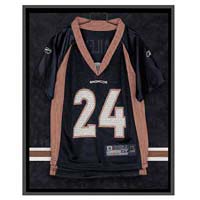 |
Spray adhesives A type of glue-like substance that is applied using an aerosol container and nozzle. Different adhesives are intended to bond different materials. Some versions are acid-free and are therefore acceptable for archival art projects.
Spray adhesives may be permanent or removable, or any bond strength in between. |
| Spring clips A thin metal strip that is arch-shaped with a flat lip on either side. They are used to ensure that the contents of a metal picture frame remain pressed to the front of the frame. The spring clip is pressed flat onto the backing of the contents and slid between the backing and the frame rabbet. This is done at even intervals around the frame. Generally, each spring clip has a notch in the end to facilitate removal with a flat head screwdriver. |
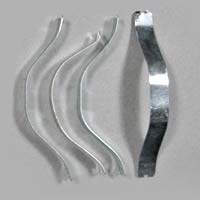 |
Stair Step Floaters A style of canvas floater frame that has a stepped profile. The frame face is flat, and then the frame juts out again approximately halfway between the face and the lip.
When fitting for a stair step floater, the framer does not need to allow for the extra 1/4" that makes the canvas appear to float within the frame. In this case, that space is already designated by the midway step of the frame. |
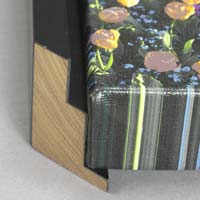 |
Standard frames A standard frame is a basic picture frame available in the sizes most common to printed images. These include 4x6", 5x7", 8x10" and 9x12".
We have a wide selection of picture frames available in any size. |
| Standoff Bolts A type of metal fastener that is attached a mounted artwork (generally a plexi mount or dibond) that creates a space and shadow between the art and the wall. The bold has a flat or gently rounded, sometimes brushed silver head attached to a screw base. The screw is inserted through a hole in the corner of the artwork. Then a wide washer is placed over the screw, between the artwork back and the wall. The remainder of the protruding screw is then screwed into the wall. The result is a contemporary, frameless display style, with only the smooth heads of the bolts showing in the top two or all four corners of the artwork. |
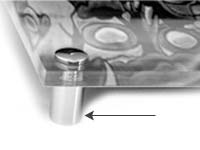 |
Stapler A handheld tool used to fasten multiple things together. The stapler is generally activated by squeezing a trigger that shoots a bent metal rod through the materials, and may fold it down on the other side to hold it in place.
Heavy duty staplers can be used to secure pieces of wood or even metal. In picture framing, a heavy duty pneumatic stapler is used to affix the stretched canvas to the back of the stretcher bar frame. |
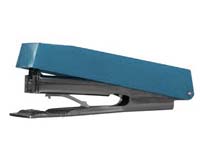 |
| Starch Paste Wheat or rice starch pastes can be used as hinging adhesives for affixing an artwork to a backing or mat prior to framing. Starches are generally water soluble and could be a conservation-grade hinging technique (meaning the starch could be removed without damaging the artwork). |
| Stock Sizes Another word for standard size picture frames. Many stores provide pre-made frames in a variety of sizes that are most common for printed images. These sizes include 4x6", 5x7", 8x10", 9x12" and 12x18". |
Strap Hangers Metal hardware used to hang picture frames that is made of a triangular metal hoop or D-ring, with a flat metal length doubled over around it, through which the screws or nails are placed. Depending on the size of the frame, a framer may use a 1-hole, 2-hole, 3-hole or even 4-hole hanger, with the screws running down the length of the frame moulding.
Order online: Strap Picture Hangers |
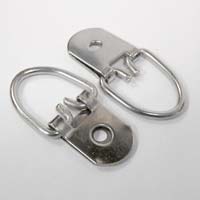 |
Stretched Canvas A canvas that has been stretched and mounted onto a stretcher bar frame. It can now be framed or hung on the wall as is.
Order your one-of-a-kind stretched canvas print today. |
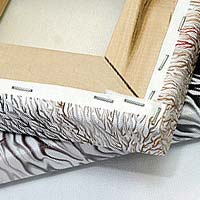 |
Stretcher bar A stretcher bar is used to construct a wooden stretcher frame used by artists to mount their canvases. They are traditionally a wooden framework support on which an artist fastens a piece of canvas.
They are also used for small-scale embroidery to provide steady tension, affixing the edges of the fabric with push-pins or a staple gun before beginning to sew, and then removing it from the stretcher when the work is complete. Stretchers are usually in the shape of a rectangle, although shaped canvases are also possible.
Since a stretcher is simply a frame, it can be constructed in a variety of ways. The differences in construction have to do with how the corners are built. Commercially available, pre-fabricated stretchers come in segments with interlocking corners that can be fit together like puzzle pieces.
Order online:
Stretcher Bars
Custom-made Stretcher Bar Frames
|
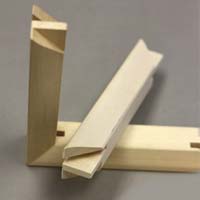 |
Stretcher frames A wooden frame made from lengths of wood (stretcher bars), around which a canvas painting or print is tightly stretched and stapled or nailed in place.
Lengths of wood are cut at a 45 degree angle with a miter saw or chopper, and joined with V nails using an underpinner machine. If the frame is large, extra cross beams may be inserted for added support.
Stretcher bars come in a wide range of depths, depending on the artist or customer's preference. The most common stretcher frame depths are 1 1 1/2" and 3/4". The depth translates to how far out from the wall the face of the canvas will protrude when hung. When a stretched canvas is being framed in a regular picture frame, the framer may use a very shallow stretcher bar of 1/2" or 7/16".
Order online: Custom-made Stretcher Bar Frames |
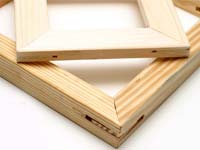 |
Stretcher Key Small wedges of wood that can be inserted into the corners of a stretcher bar frame to make it a little bit larger. This is done because canvases can stretch out over time, and begin to sag on the frame.
Stretcher keys work only for half lap-jointed stretcher bars, because there is a gap within the wood. If the frame was constructed by a framer and attached with mitered corners, this method will not work. |
| Stretching canvas The process of affixing a printed canvas or original painting to a stretcher bar frame. This involves stapling the edges of the canvas to the back of the frame after tightly wrapping it around the stretcher bars. The result is a clean, frameless display that can be hung on the wall as is. By attaching at the back, none of the raw edges or staples are visible. |
| Striplight A striplight is a multi-circuit stage lighting instrument. Striplights are one of the most basic types of lighting fixtures available. They usually consist of row of lamps. A single striplight is usually wired internally into either 3 or 4 circuits. |
| Styrene Sheeting An inexpensive plastic sheet that is used as a clear cover for cheap picture frames. Over time, this type of cover becomes brittle and yellow. Also called "polystyrene sheeting". |
| Sub-Frames Similar to a fillet or slip frame, a subframe adds additional interest and decoration to a framed image, as well as create more depth between the glass and the image. Inserted between the glass and the artwork, under the lip of the frame, the subframe may have a flat or curved (scoop) face, and may be only slightly visible, or wider to serve the purpose of a mat. |
Sublimation Sublimation is a process where an image can be printed onto transfer paper using dye-based inks and then with heat and pressure become transferred into the substrate.
Dye sublimation on hard surface surfaces is possible if the surfaces have been coated. Instead of printing images directly on a surface, which may scratch easily, the image is infused into the coating to provide permanent protection and durability.
|
| Substrate In printing and imaging, a substrate refers to the underlying material or surface onto which images, text, or graphics are printed or transferred. Common substrates include paper, cardboard, canvas, fabric, plastic, metal, glass, and wood. The choice of substrate depends on factors such as the printing process, intended use, durability requirements, and desired aesthetic qualities. Substrates vary in characteristics such as texture, weight, opacity, absorbency, smoothness, and finish, influencing the visual appearance, tactile feel, and longevity of printed materials. |
| SUEDE mats A picture framing mat board that is covered in a thin layer of imitation suede (soft leather with a "furred" finish, similar to velvet). Due to its texture, suede creates interesting color changes across the mat. |
 |
Super softstrand wire A type of vinyl-coated wire used for picture hanging. The coating protects the wire from splintering, strengthens it, and provides a soft, smooth protection to the hands when affixing it to the frame. "Super" softstrand is known as the most finger-friendly wire.
Order online: Picture Hanging Wire |
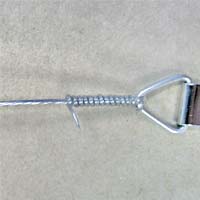 |
| Surflon wire A nylon-coated wire that can be easily knotted and is very strong, due to the coating. It is also very flexible and kink-resistant. |
T ^^Top
T-Hinge (1) The result of a method of affixing artwork to a backing or mat prior to framing. The artwork is adhered with the tape or hinging tissue only at the top edge, leaving the rest of the edges hanging loose. This allows the artwork and attached material to expand (due to humidity and temperature changes) without buckling in the frame. This method is used when the mat will be covering the edge of the artwork, since the tissue or tape will be visible above the artwork edge.
(2)A style of metal hinge hardware that has a base that is wider than the hinged piece that connects to the other side. A T-hinge may be used when one of the pieces attached weighs less than the other, therefore requiring less support. |
 |
| Tack cloth A cloth used for wiping that is treated with a tacky substance intended to better remove dust and particles that might marr a surface prior to painting or framing. |
| Tacking iron A handheld tool used to activate heat-sensitive adhesives in small sections. The pointed tip can easily press into corners. Used in collaging, quilting, photography and more. |
| Tapered Floaters A type of canvas floater frame that features a drop edge is wider at the face than at the lip due to a gradual taper. As a result, the additional 1/4" usually added to each dimension to allow the canvas to "float" in the frame is unnecessary, as a canvas set against the wide base will be automatically separated from the face. |
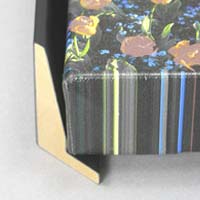 |
Tapped angles A piece of metal hardware used for constructing metal frames. Also called a "corner", it is an L-shaped piece of flat metal with a screw in each end. Once it is inserted into the track at the back of the frame leg with the untapped angle below it, the screws are "tightened" to press away from the bottom piece and hold the frame corners together.
Order online: Tapped Corners |
 |
Teak wood Teak is a dense hardwood that is known for its ability to withstand the elements, and for the beautiful furniture that is often made from it. Highly durable and water resistant, Teak is generally golden or dark brown in color with a coarse texture.
The wood is easily workable in all areas, though silica in the body of the tree has been known to dull blades. Considered the best wood for rot resistance, Teak is a good choice for archival picture framing. |
 |
| Techmount A company that produces a heat-activated adhesive tissue used in dry mounting processes. The tissue is placed between the mounting surface and the image, and pressed with a heated iron or lidded press. The tissue adheres the artwork to the mounting board. |
Thick Gallery Wrap Any stretched canvas that has been wrapped around a stretcher bar frame that is 1 1/2" deep. The depth translates to the distance the viewed portion of the canvas will extend from the wall (the width of the drop edge).
Order your thick gallery wrapped canvas print using our easy online ordering process.
Or order 1-1/2 inch Stretcher Bars, unassembled |
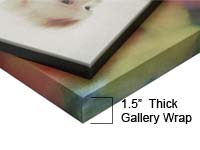 |
Thin Gallery Wrap Any stretched canvas that has been wrapped around a stretcher bar frame that is 3/4" deep. The depth translates to the distance the viewed portion of the canvas will extend from the wall (the width of the drop edge).
Order your thin gallery wrapped canvas print using our easy online ordering process.
Or order 3/4 inch Stretcher Bars, unassembled |
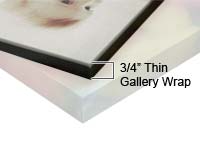 |
| Tint A tint is a color created when a solid color is mixed with white, creating a lighter version of the color. In contrast, a "shade" is a color mixed with black to create a darker version of the color. In printing and color reproduction, a tint refers to a variation of a base color achieved by adding white or another lightening agent to lighten or dilute the color's intensity. Tints are commonly used to create subtle variations in color, achieve pastel shades, or adjust the brightness and saturation of colors in printed materials. Tints play a vital role in color matching, color correction, and color harmony in graphic design, illustration, and printing. |
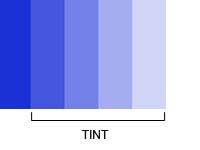 |
| Tone Tone refers to the degree of lightness or darkness of a color, often described in terms of its brightness or value. In visual arts, tone is an essential aspect of color theory and perception, influencing the overall mood, contrast, and visual impact of an image or artwork. Tones range from light to dark along a grayscale or tonal scale, with lighter tones containing more white or lightness and darker tones containing more black or darkness. Adjusting tone can alter the perceived depth, form, and spatial relationships within an image, affecting its composition and emotional resonance. |
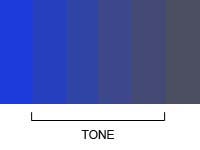 |
| Tooth Used to describe the grain of the artistic papers. It refers to the roughness of the paper - the depressions between the fibers - created by the machine during processing. |
| Touch-up supplies Substances or materials used by the framer to repair damage or imperfections in, or alter the appearance of, a picture frame. They can include waxes, wood markers, color additives, gold leaf paint, nail hole filler or gilt cream. |
| Triple mat A picture frame display that has three overlapping mats between the glass and the image. Often, there will be a 1/4" reveal on the middle mat, and a 1/8" reveal on the bottom mat (this may be doubled in the case of a large artwork, as it is reliant on ratio). It is important to note that the rabbet of the frame (the cut out area behind the lip) must be deep enough to hold the glass, artwork, backing and three mat boards. |
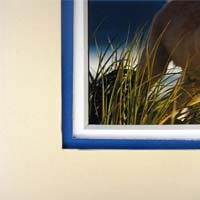 |
| Tru Vue glass Tru Vue is a company that produces glass and acrylic cover products that are manufactured and treated to minimize the green or orange tint, and the interfering reflection, that regular glass often gives to the artwork it covers. They also offer non-glare and anti-static versions. |
 |
Turn buttons A tab with a screw hole on one end that is used to hold the artwork contents within the frame. The button is screwed into the back of the frame, close to the inner edge. The tab extends across the rabbet, keeping the backing in place. If not overtightened, the turn button can be moved off the backing, allowing the owner to easily change out the art.
Order online: Turn Buttons |
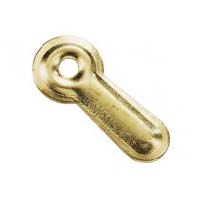 |
TYVEK Made from polyethylene (a petroleum-based plastic) fibers flashspun to produce an unwoven, synthetic material, Tyvek (the brand name from the company DuPont) is most often used to protect building foundations before the siding has been put up. The material is strong and difficult to tear (but easily cut), and repels liquid water.
In printing, this substrate can be used much like regular paper, though it must be properly treated for any ink applications besides lithographic and flexographic. Solvent inks with too high a solvent concentration can cause the material to swell, and water-based inks may cause the image to feather or blur. Tyvek is commonly used for printing ski tags, banners, tags, and labels. |
U ^^Top
Ultraviolet "UV" light has a shorter wavelength than visible light and is found in both natural and artificial light sources. UV light can damage artwork by causing fading, cracked paint and other chemical changes. Conservation-grade framing materials are UV-protected; this includes acrylic and glass covers, mat boards, backing and art paper/canvas. |
Underpinner A machine, generally operated manually with pneumatic assistance, that is used to join picture frame length moulding in the construction of the frame. The mitered corners of two moulding pieces are set together on the machine to create a 90 degree angle. When a lever or button is pressed, a foot is lowered to hold the pieces down, while V-nails or other fasteners are forced into the underside of the wood, holding the corner together.
Order online: Underpinner Wedge Nails |
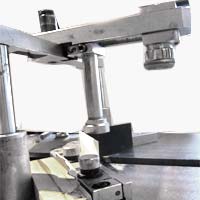 |
| Uni-frames A frameless display product that holds the artwork between two panes of glass or acrylic. Small cleats clip the panes together, and are held in place with string or wire threaded through them from the back. The result is a "floating" artwork that still protects the image. |
| United Inch United inches is a term used in the framing industry to describe the size of a print for the purpose of pricing. The number of united inches in any given image is the sum of its length and its width (one side only for each). Thus, in effect, it represents 1/2 the perimeter of the print. For example, an image that is 10 x 20 has 30 united inches, and a 24 x 36 inch print has 60 united inches. |
Unprimed Canvas An artist's canvas that has not been treated with a clear or white primer. As a result, when the paint is applied, it is readily absorbed into the fibers of the canvas, affecting the appearance. Though whether or not to use unprimed canvas is the choice of the artist, in the case of oil painting unprimed canvas can be problematic, since the oil paints will cause the raw canvas to rot. In addition to creating a smoother surface for the paint, primer protects the canvas from the elements.
Order online: Artist Canvas |
 |
| UV Ultraviolet light. UV rays are beyond the visible spectrum of humans. UV radiation comes from a variety of sources, including the sun, lamps, LEDs, lasers, etc. |
UV Non-Glare Protective Plexiglass Acrylic where one or both surfaces have been treated chemically or mechanically to slightly roughen the surface, causing reflected incident light to be dispersed in all directions, minimizing glare. In addition, the glass is treated to repel UV rays, protecting the artwork from fading, yellowing or peeling. UV plexiglass is considered conservation or archival quality.
Because the glass surface is not smooth, art images behind the glass tend to be softened. The softness depends on how far the art is from the glass. No more than two or three mats are recommended to be used with non-glare glass. If clarity is desired, objects in deep frames (shadow boxes) should not be displayed with non-glare glass.
When you order your framed print, you can choose the best plexiglass for the display.
Or order Plexiglass Mounting Boards |
V ^^Top
V-grooved A decorative detail created by wedge furrow or rut cut in a picture frame face or mat board that creates a V-shaped indent in the surface. |
| V-Hinge The result of a method used for affixing an artwork the a mounting board prior to framing. The hinging tissue or tape is folded in half and placed at the top center of the artwork, between the paper and the backing. This method is used when the mat is not covering the edges of the artwork, since it conceals the hinging tissue. |
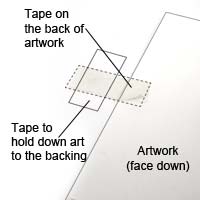 |
V-nails (Wedges) The type of nails used in an underpinner machine to attach the mitered edges of picture frame moulding to form a right angle corner. The nails resemble wide staples that are bent into an L or 90 degree angle. This shape allows one end of the nail to be inserted into each frame leg, holding the two legs together.
Order online: Wedge V-nails |
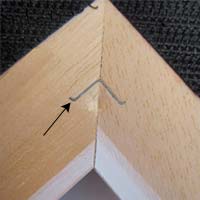 |
| Vacuum presses A machine used in lamination or veneer processes. After the artwork, encased in the laminating envelope, is placed within the press, all the air is removed, suctioning the envelope to the artwork. Vacuum presses work with various mounting substrates such as foam core and wood. They are available with or with applied heat. |
| Varnish A high-shine, semi-transparent or opaque liquid coating applied to most often to wood, which dries hard to provide protection and tinted color. Also referred to as lacquer, enamel or glaze. |
| Velcro A brand name hook and loop fastener that impermanently adheres two surfaces together. Velcro consists of two different strips or sheets, the hooks (coarse, wiry loops of a plastic thread-like material) and the loops (a softer, fuzzy surface) which stick together firmly when pressure is applied. The back of the strips may have a pressure-sensitive adhesive that allows it to be affixed to the surface without glue or sewing. |
 |
| Veneer Ornament Veneer is a thin strip of wood that is adhered to a surface to give that surface the appearance of solid wood. In picture framing, veneer may be applied to the top of a wood frame in order to achieve a desired wood grain effect. |
| Vises A clamp tool used to hold an object (or multiple objects) in place, either to allow an adhesive to dry, or to keep the object still while other processes are carried out (sawing, carving, etc). A vise has two parallel jaws that are separated by a handle or level which is used to move them together and apart. |
W ^^Top
Wall frame A frame just by itself without any glass, hardware or backing. |
| Wallbuddies A brand name type of frame hanging hardware that affixes to both the top horizontal, and vertical leg on each side of the frame. This ensures that all the weight of the frame and contents is not supported solely by the top leg of the frame. |
Walnut wood Walnut varies in color from a pale brown to a rich chocolate brown. It is a dense hardwood whose grain can be irregular or straight. When straight-grained, the wood is easy to work with; irregular grain can sometimes result in pieces of the wood chipping out while cutting.
Walnut can be an expensive wood, and is most often seen as a veneer on furniture and picture frames. |
 |
Wash line A picture display method that consists of a wire or string stretched horizontally between two vertical beams (or walls) on which images are hung using clips or clothespins. This is a modern rustic decor technique.
Could also refer to the line strung across a darkroom in a photography studio, onto which prints are hung to dry when they are removed from the developer. |
 |
| Watercolor painting Watercolor painting is a painting method. A watercolor is the medium or the resulting artwork, in which the paints are made of pigments suspended in a water soluble vehicle. The traditional and most common support for watercolor paintings is paper; other supports include papyrus, bark papers, plastics, vellum or leather, fabric, wood, and canvas. In East Asia, watercolor painting with inks is referred to as brush painting or scroll painting. In Chinese and Japanese painting it has been the dominant medium, often in monochrome black or browns. India, Ethiopia and other countries also have long traditions. Finger painting with watercolor paints originated in China. |
 |
Wedge (1) Another name for V-nails used in underpinners to join two mitered frame lengths into a 90 degree corner. this video shows how it works: click here
These wedges are made from a special steel alloy which gives shape memory properties to the wedge. This way, when it penetrates into the moulding, it spreads its wings which -because of shape memory- try then to come back to their initial position.
This results in pulling very strongly the 2 pieces of mouldings towards each other, so as to give a perfectly closed corner.
(2)Thin pieces of wood that are inserted into the corner of two mitered frame lengths to join them together.
Order online: Wedge nails |
| Wet Mounting The process of adhering a print to a rigid backing such as foam core, gatorboard or wood using a wet adhesive (glue, paste) that adheres as it dries. In contrast, dry mounting uses a "dry" adhesive that is activated by heat rather than air dryinh. |
| Wheat Starch Paste A paste made from wheat flour that can be used as a hinging adhesive for affixing an artwork to a backing or mat prior to framing. Starches are generally water soluble and considered a conservation-grade hinging technique (meaning the starch could be removed without damaging the artwork). |
White core mat A mat board that is constructed from bright white fiber that is tightly pressed into a thick layer. A thinner, colored layer is laid over top to provide the color of the mat. The white core is visible in the finished display only at the bevelled inner edge.
At KeenART Media, our Peterboro White Core mats are buffered with calcium carbonate to make them stable for many years. The backing paper on the mat is conservation quality so it will not react negatively with your artwork. The white core will resist discoloration over time.
Order online:
Uncut Matboard, 32x40"
To order Custom Cut Frame MatBoards click here: Custom Cut Frame MatBoards |
| Wholesale framing The process of selling picture frames not directly to a customer but rather to a company who will then sell them to the customer. In other words, B2B (Business to Business), not B2C (Business to Consumer). |
| Wilhelm Imaging Research A company that researches the stability and preservation qualities of digital images and film. They publish data regarding the inkjet printers used for giclée printing. |
| Wipes Clothes designed specifically for cleaning glass and acrylic are formulated to prevent static build up on the surface, therefore minimizing the adherence of dust and other particles. |
Wire Hoops Any type of hanging hardware that provides a loop or eyelet through which wire can be threaded. Generally, two hoops are attached to the frame or canvas, one on each vertical arm, 1/3 of the frame's size down from the top. Depending on the size/weight of the artwork, the hook may be affixed with one, two or as many as four screws or nails. The wire is then twisted around each hook, with a bit of slack in the middle to allow it to be hung over a nail or wall hook and displayed.
Order online: Ring Hangers |
Wood Panels A wood surface suited for arts and crafts or anything imaginable. These Hardboard Panels offer an archival alternative to stretched canvas. This rigid support is best for non flexible media such as tempera, and casein paints or even Resin Coatings.
- 15/16" Standard or 1-5/8" Profile deep - with Baltic Birch plywood Surface
- Wood panel, art panel, Hardboard Panels, Birch plywood Surface are the other names.
Order online: Wood Panels |
Wooden French Cleats A two-piece hanger with a bevelled edge on each piece, used for displaying large framed artwork on the wall. One long wooden piece is screwed into the back of the picture frame, with the lip facing down. The other piece is screwed into the wall with the lip facing up. The frame lip will then sit within the wall lip, securely holding the artwork.
Metal french cleats are also available.
Order online: Metal French Cleats |
Workbench A workbench is sturdy table at which manual work is done. They range from simple flat surfaces to very complex designs that may be considered tools in themselves.
Workbenches vary in size from tiny jewelers benches to the huge benches used by staircase makers. Almost all workbenches are rectangular in shape, often using the surface, corners and edges as flat/square and dimension standards. Design is as varied as type of work for which the benches are used but most share these attributes: |
Wraparound effect This effect is created when canvas is mounted onto a wooden frame, stretched around the sides, and fastened with staples in the back. In the instance of an "image wrap", the front image is continued around the sides of the frame, creating a continuous, angled viewing area.
Create your own, unique wraparound wall hanging with a custom made Giclée canvas print. |
Y ^^Top
Yellowing A process that results in discoloration of a mat board, backing, Resin Coating or artwork paper. Yellowing is caused by exposure to light, or chemical reactions that cause the substances added to whiten the paper to break down over time.
Though sometimes a desired look, yellowing is generally detrimental to artwork, and affects its longevity. |
Z ^^Top
Zeolites A aluminosilicate substance added to mat boards to absorb any harmful environmental contaminants before they come into contact with the contents of the frame. |
| Zinc-plated A wide variety of metal hardware and tools is coated in a thin layer of zinc, which helps to prevent rusting and corrosion. Hangers, hooks and fasteners may be treated with the substance. |
| Zip lock bags A type of plastic bag with an opening that can be sealed by pressing two interlocking strips together. Some zip lock bags contain a plugged hole out of which the air can be sucked to achieve a vacuum effect. |
|
© 2002-2024 - KeenART Media Ltd.
|
|
| |
|

 Canvas Prints
 Fine Art Printing
 Framed Prints
 Plaque Mounting
 Fabric Printing
 Metal & Wood Prints
 Plexi Face Mount
 Print & Dry Mounting
 Cityscape Prints
 Greeting Cards
 Classical Art Prints
 AGP Galleries

 Custom Picture Frames
 Canvas Floaters
 Wood Frames
 Metal Frames
 Canvas Transfer
 Custom Stretcher Frames
 Custom cut MatBoards
 Custom Plexi Cuts
 Custom Size Boards
 Pre-Cut Boards
 Framing Hardware
 Upload Your Photos
 Ideas Gallery
 How it works?
  Artwork Scanning
 Laser Engraving & Cut
 Coffee Mug Prints
 Acrylic Blocks
 T-shirt Prints
 Handmade Oil Paintings
 All Products
 Custom Artist Canvas
 Custom Size Wood Panels
 Canvas Stretching Services
 Resources
 DoveTail Guide
 Aluminum Bars
 Wood Panels
 Stretcher Bars
 Easels & Display
 Resin Coatings
 Cork Rolls/Sheets
 Resin On Canvas
 Price Calculator
 Gift Certificates
 Collages on Canvas
 Word Cloud Design
 Photo Mosaics
 Image Effects
 FAQs
FAQs Pro Accounts
 Artist Gallery Program
 Corporate Art
 Contact KeenART
 Turnaround time
 Shipping
 Rush Orders


